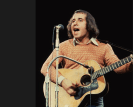

Looks like this Smother Brothers show never made it to TV. Someone any ideas?
Looks like this Smother Brothers show never made it to TV. Someone any ideas?
The Philadelphia Inquirer of November 9th 1969, mentions an upcoming concert of Simon & Garfunkel on November 23rd at The Miami Beach Auditorium/Convention Hall:
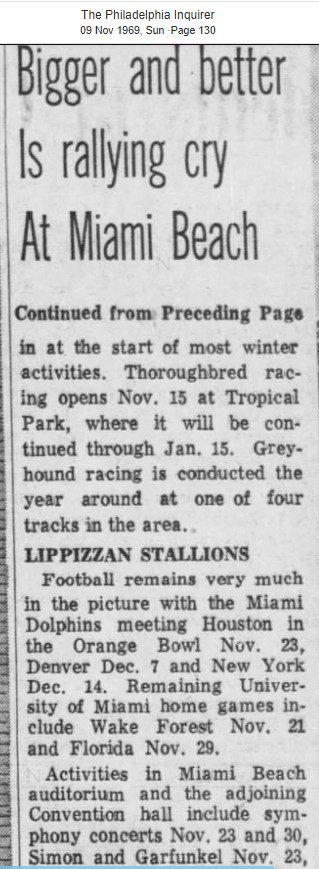
So far I have not been able to get it confirmed by an advertisement or a review.
here are the other 1969 shows as known to me now:
1969-05-02 Buffalo (NY), University of Buffalo [joining a Frank Zappa concert as Tom & Jerry]
1969-07-28/30 Los Angeles, USA, CBS Convention, Century Plaza Hotel
1969-10-31 Detroit, Cobo Hall (Start of the ’69 tour)
1969-11-01 Kansas Wichita State University / Henry Levitt Arena USA WI
1969-11-02 St. Louis, Kiel Auditorium
1969-11-07 Philadelphia, Philadelphia Civic Center, Convention Hall
1969-11-08 Carbondale Southern Illinois Univeristy / USA IL
1969-11-09 Oxford Miami University / Millett Hall USA OH
1969-11-14 Salt Lake City Salt Palace USA UT
1969-11-15 Long Beach USA CA
1969-11-27 New York City Carnegie Hall USA NY CBS
1969-11-28 New York City Carnegie Hall USA NY CBS
And in 1968, when CBS had become CBS/Sony, released was the following EP:
Simon & Garfunkel – Sounds Of Silence
Label: CBS/Sony – SOPD-41
Format: Vinyl, 7″, 33 ⅓ RPM, EP, Stereo
Released in 1968
A1 The Sounds Of Silence
A2 Leaves That Are Green
B1 I Am A Rock
B2 We’ve Got A Groovy Thing Going
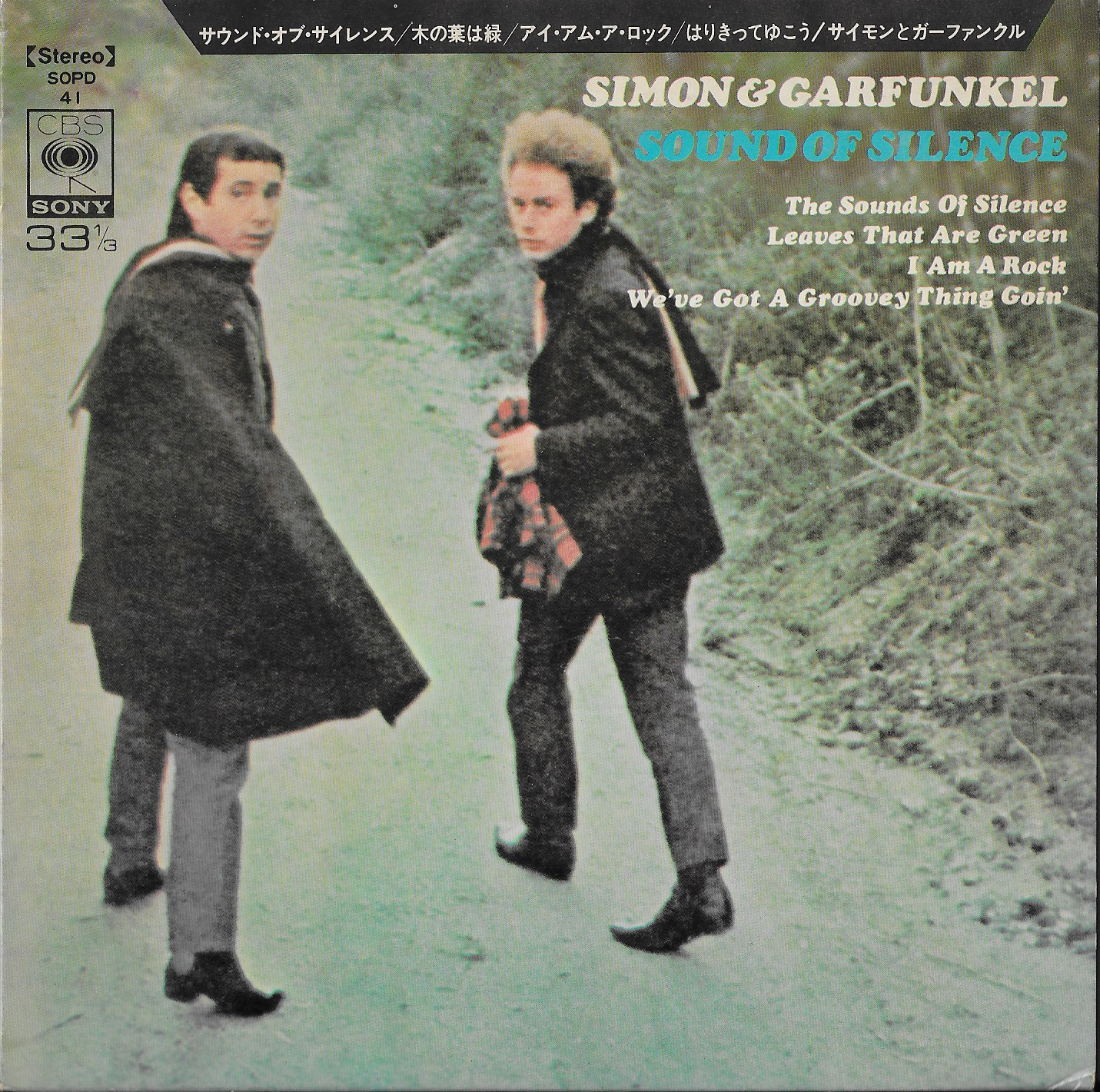
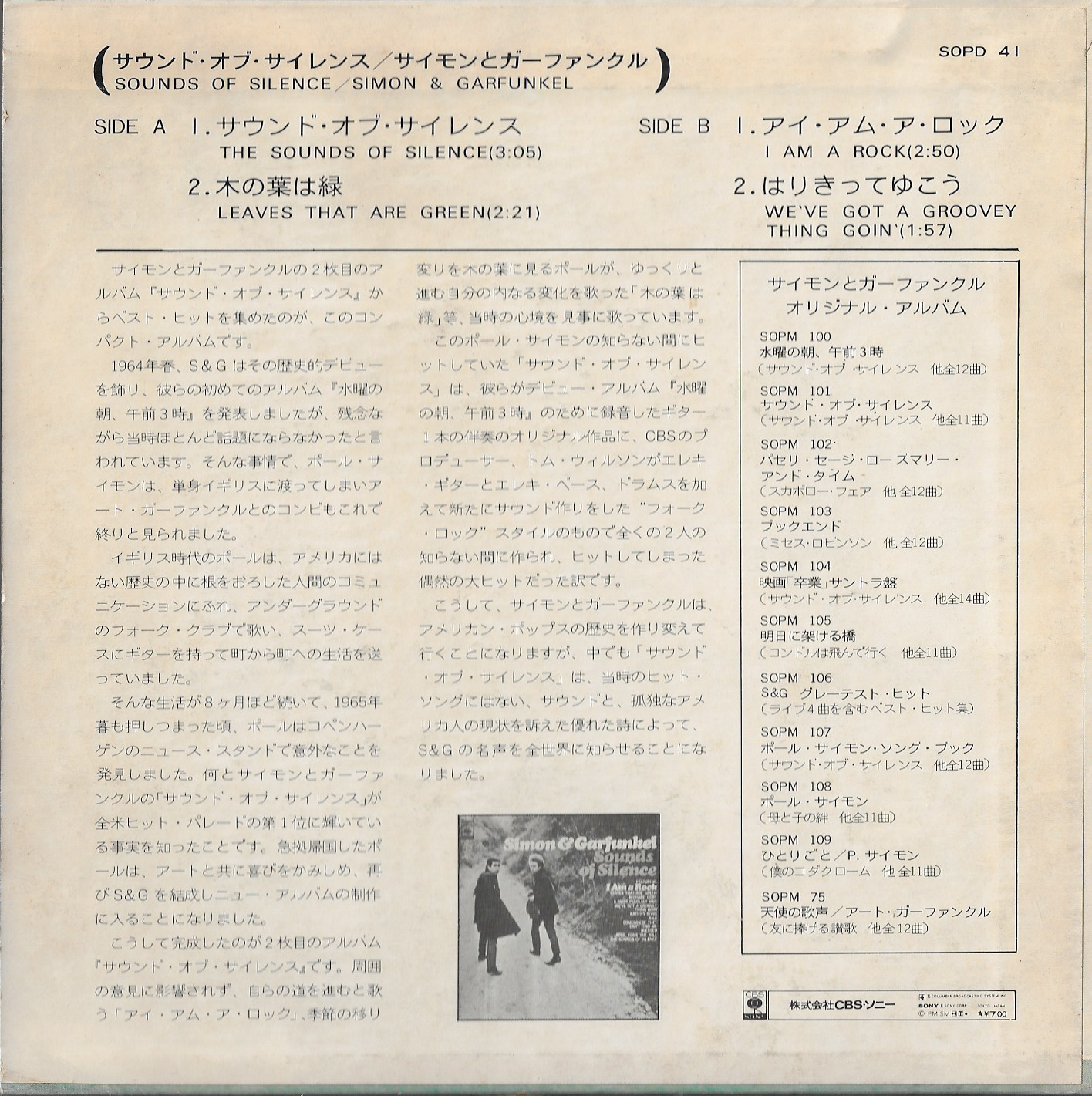
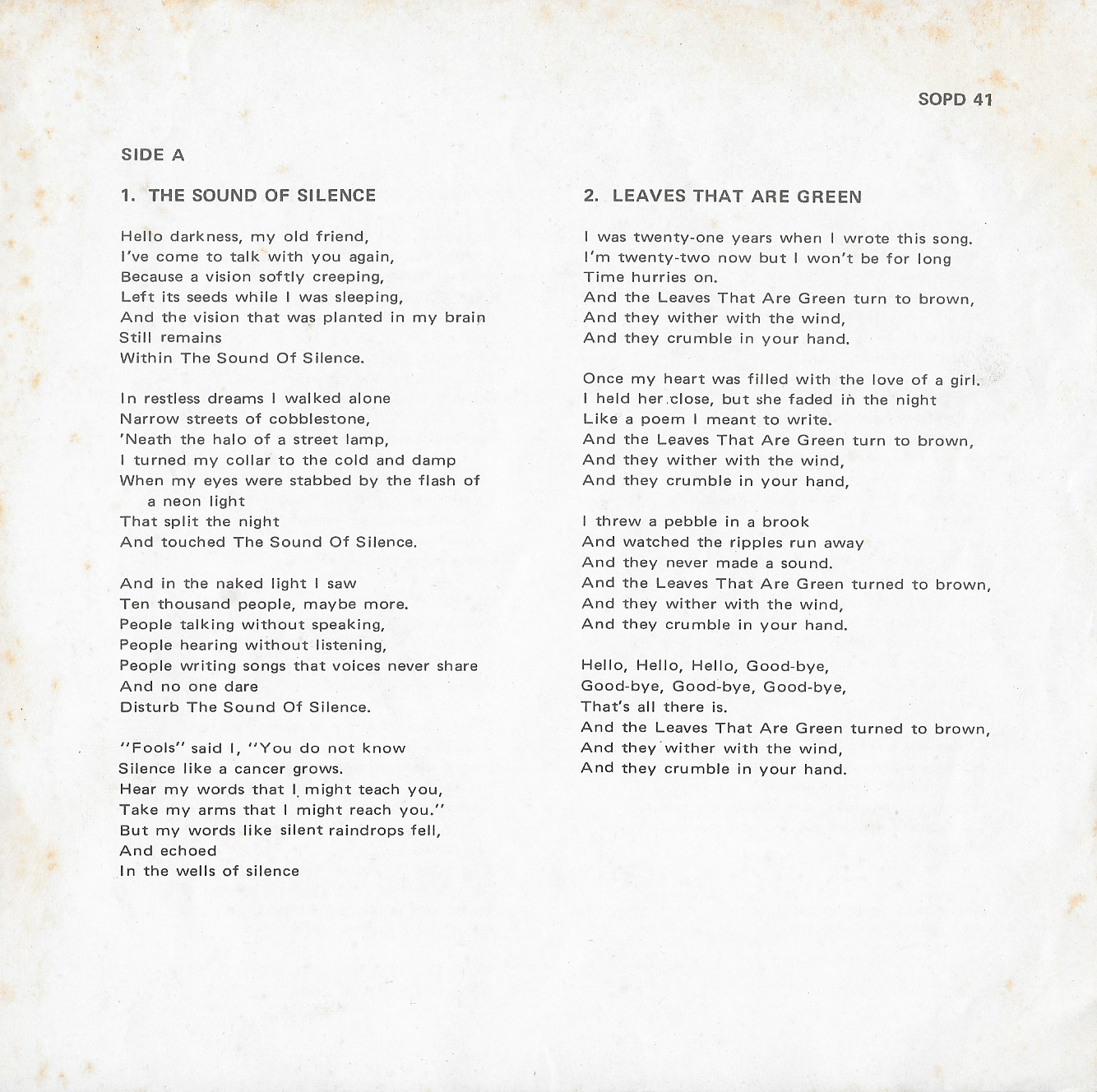
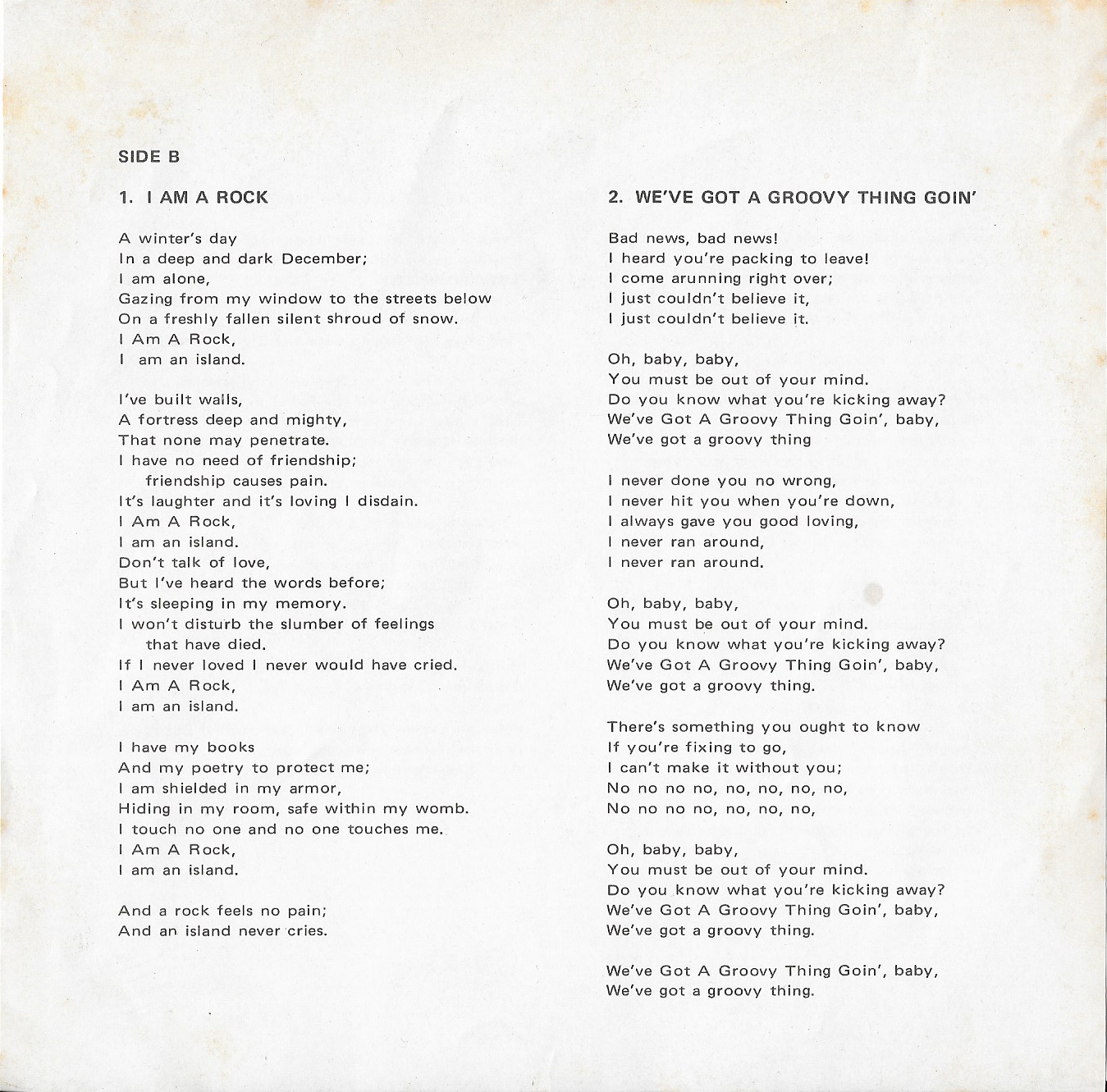
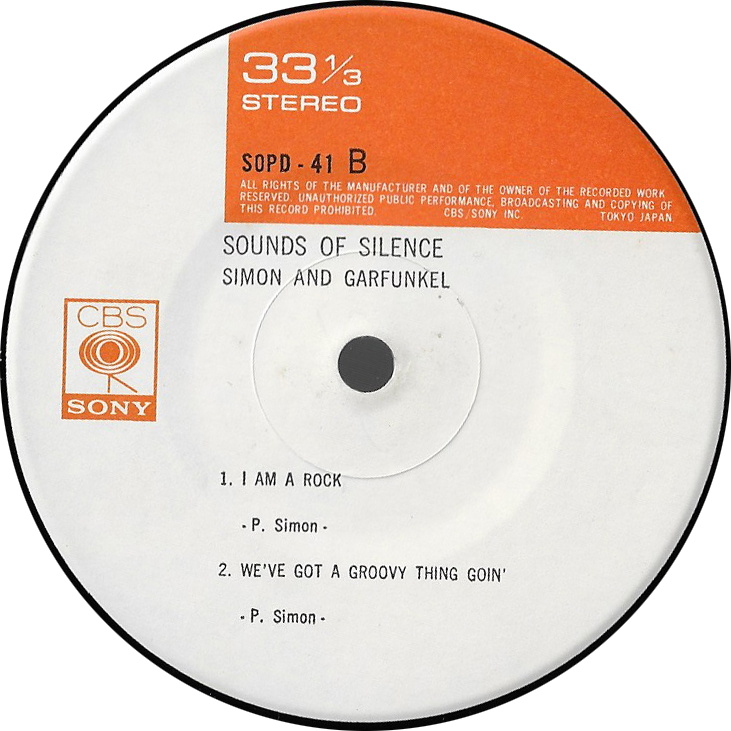
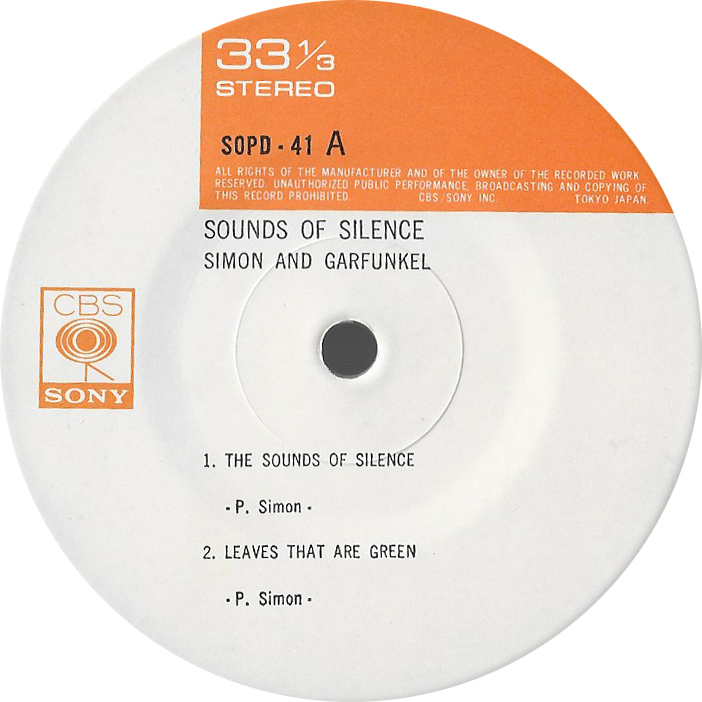
Here’s another nice release from CBS Japan.
As in most countries outside the USA, the first lp by Simon & Garfunkel that was released was the album ” Sounds of Silence”, in 1966. This album was recorded shortly after immense success of ” The sound of silence” which had become a Numer One hit at the end of 1965.
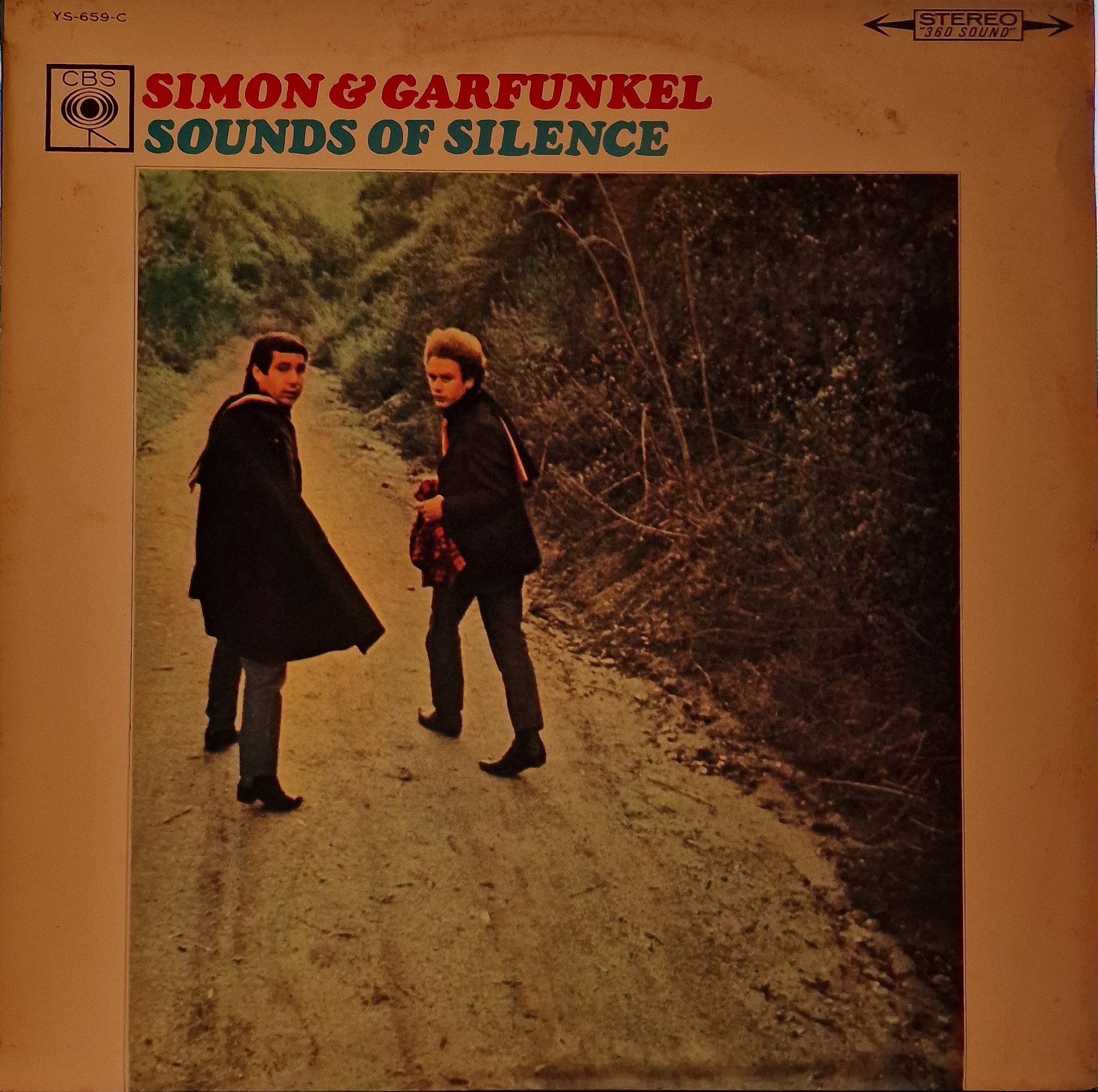
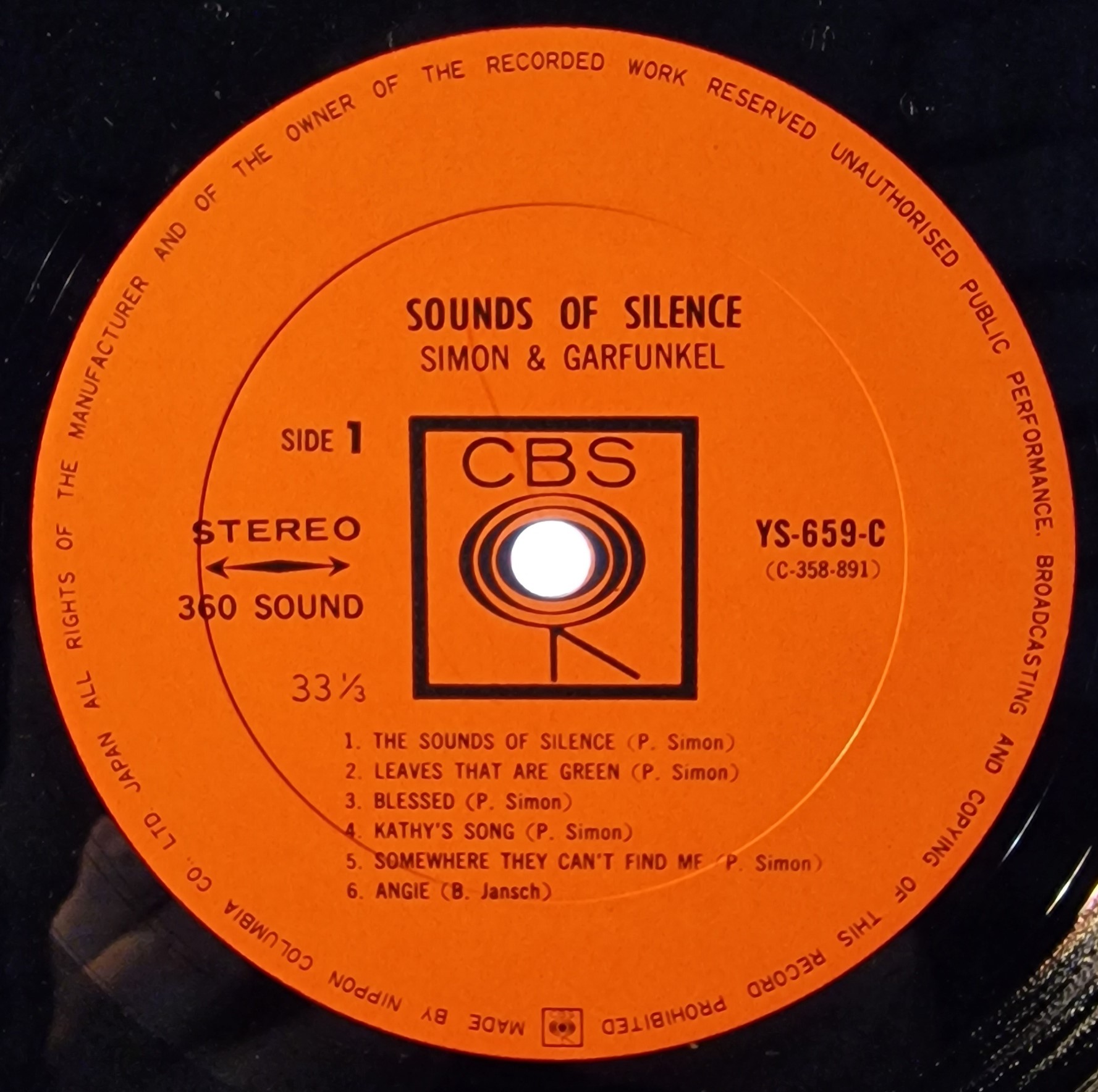
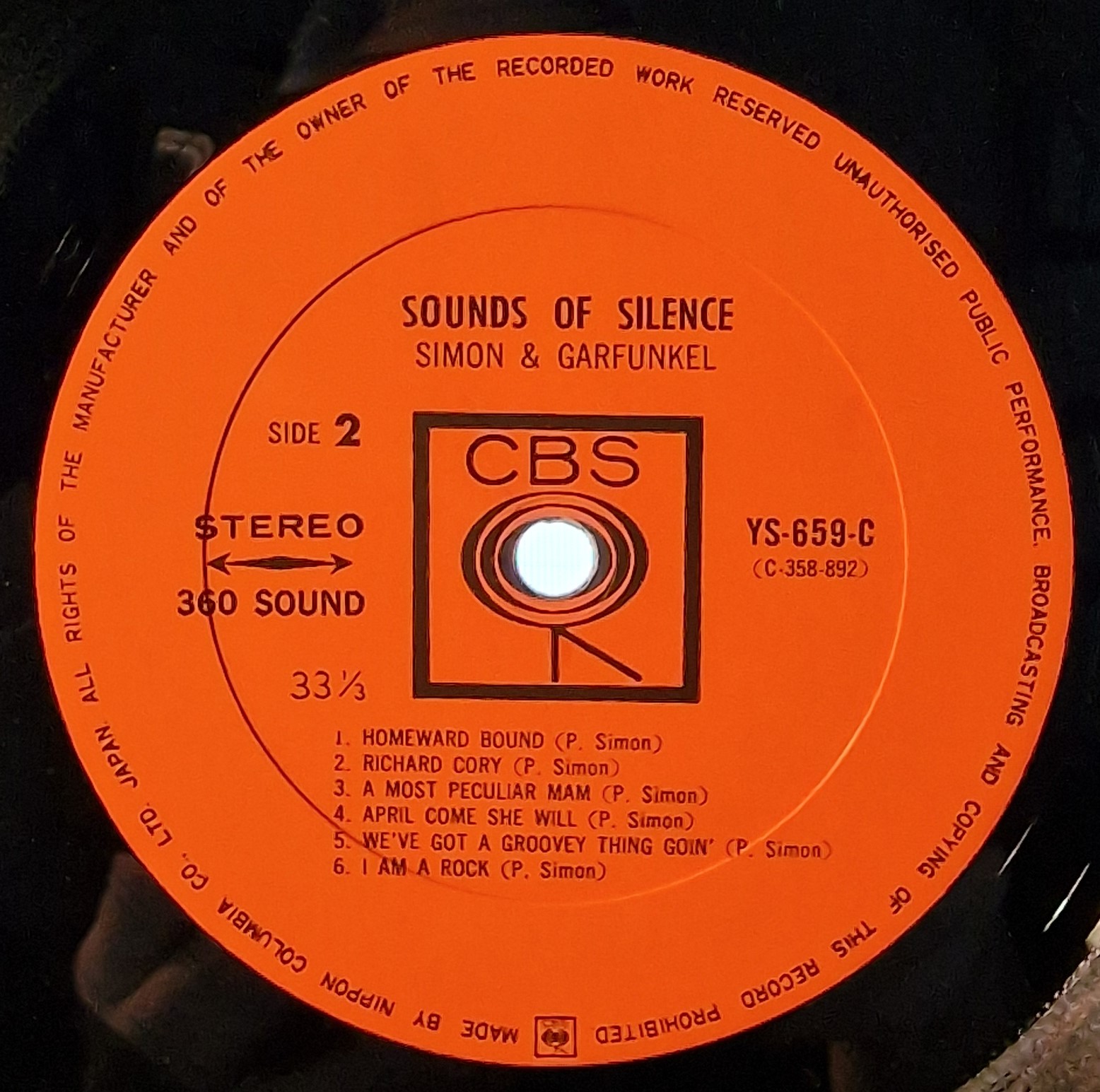
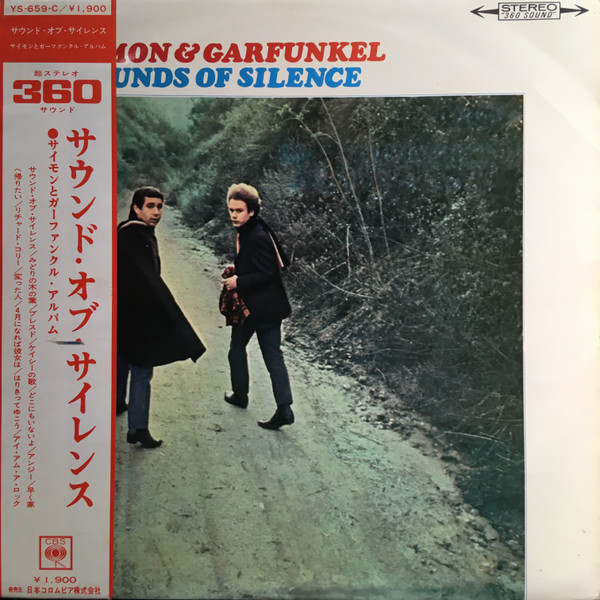
Above pictured is the CBS YS-659-C released In Japan in August 1966.It came with OBI and had a sheet with the lyrics:
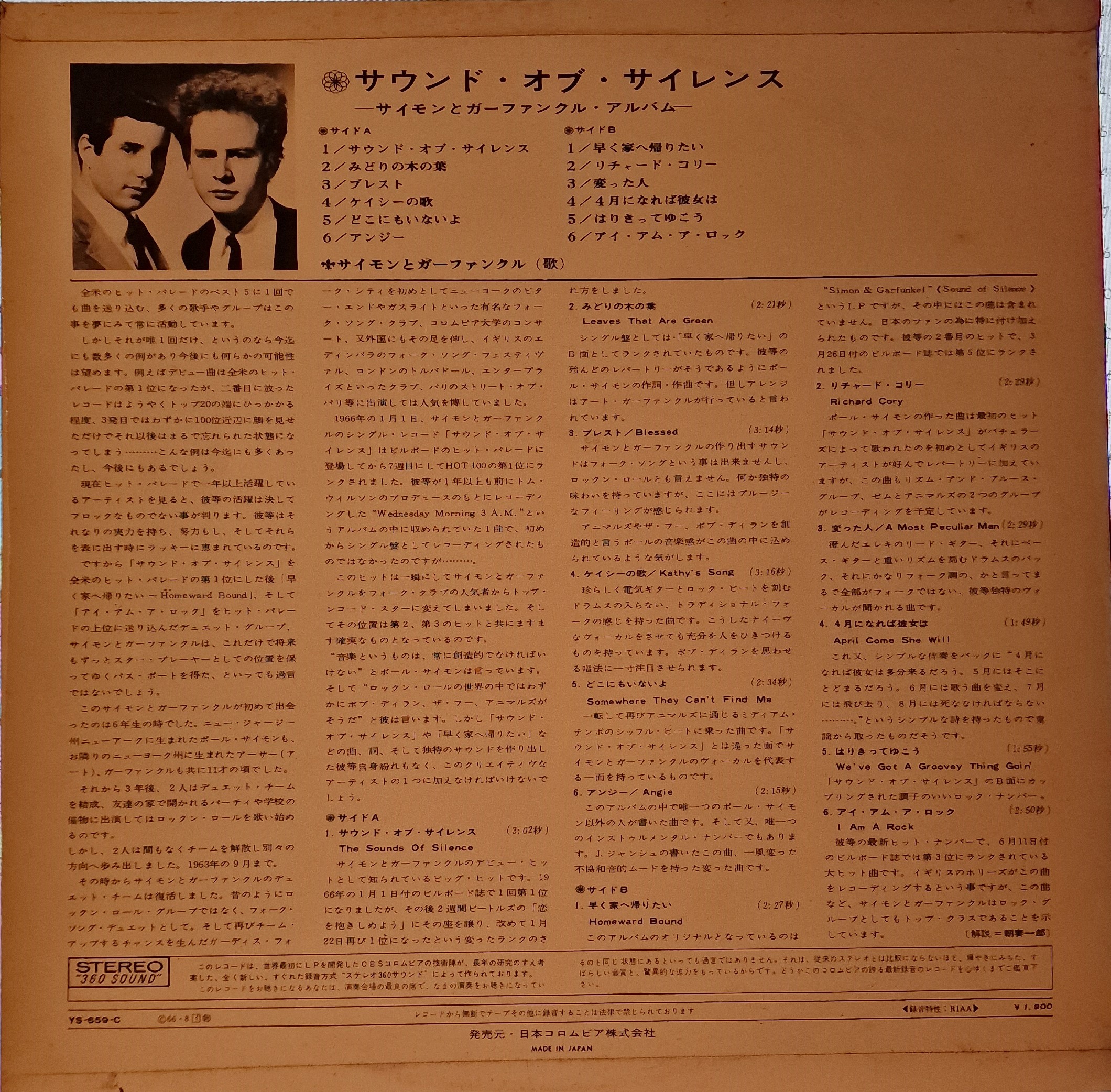
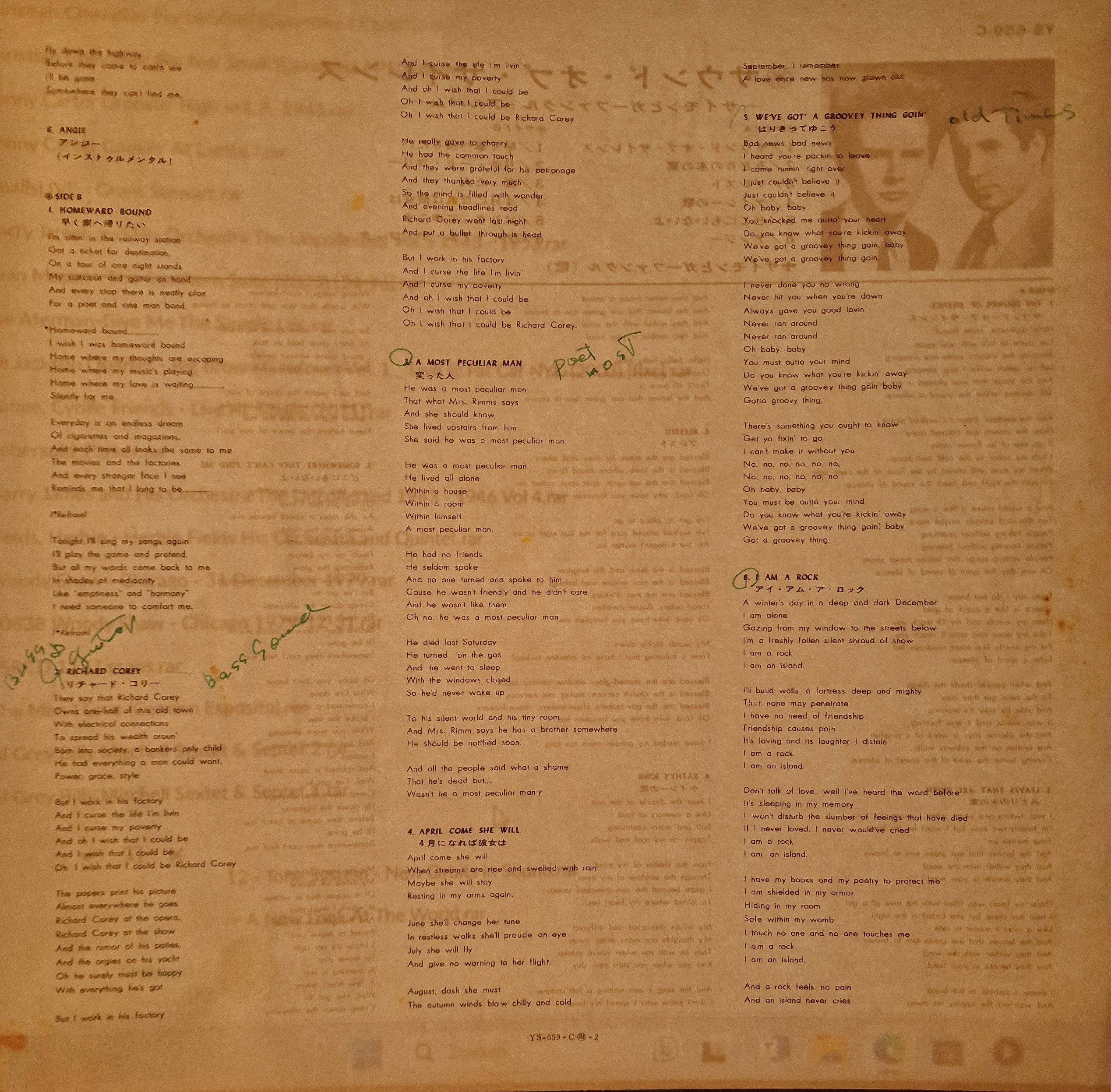
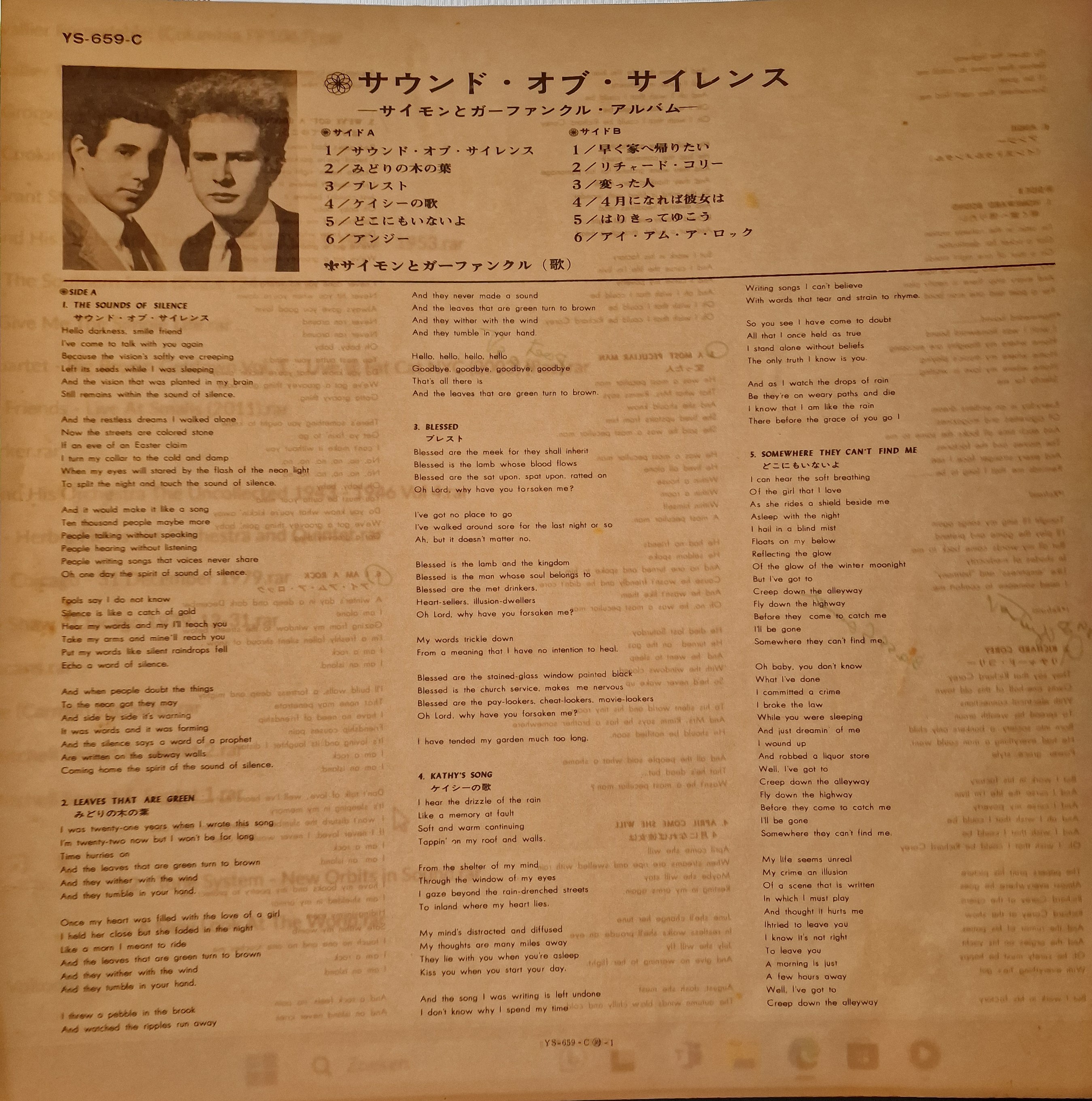
CBS LL-894-C released in March 1966
The singles that were released from this album were:
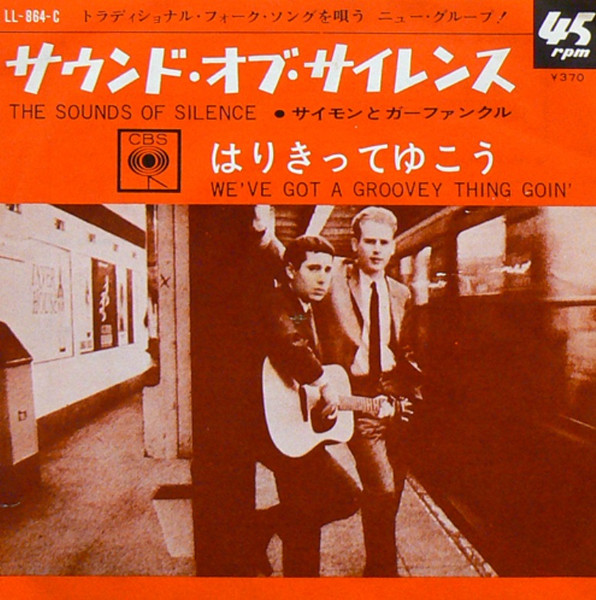
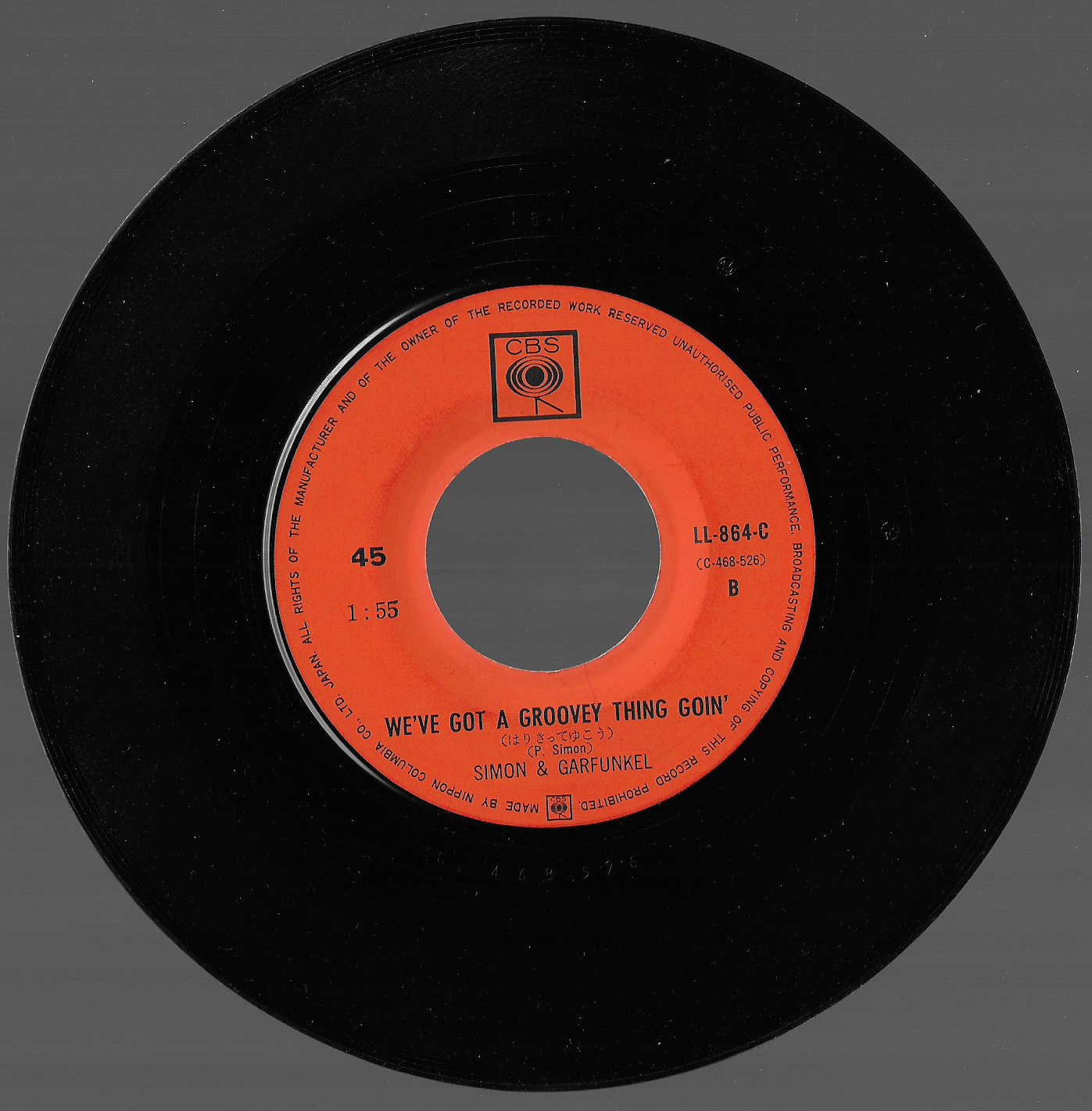
CBS LL-864-C released January 1966: The Sound of silence / We’ve got a groovey thing goin’
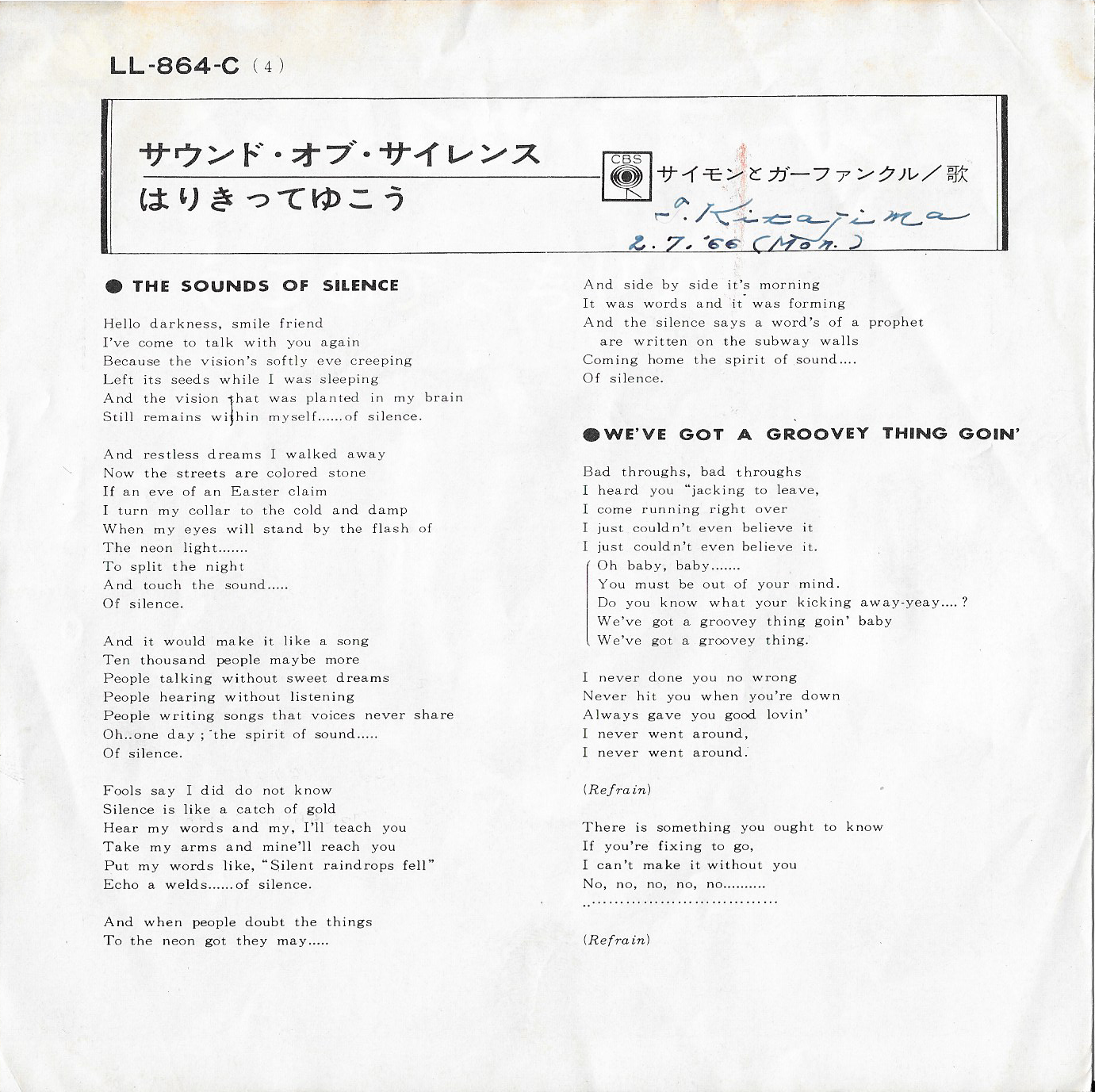
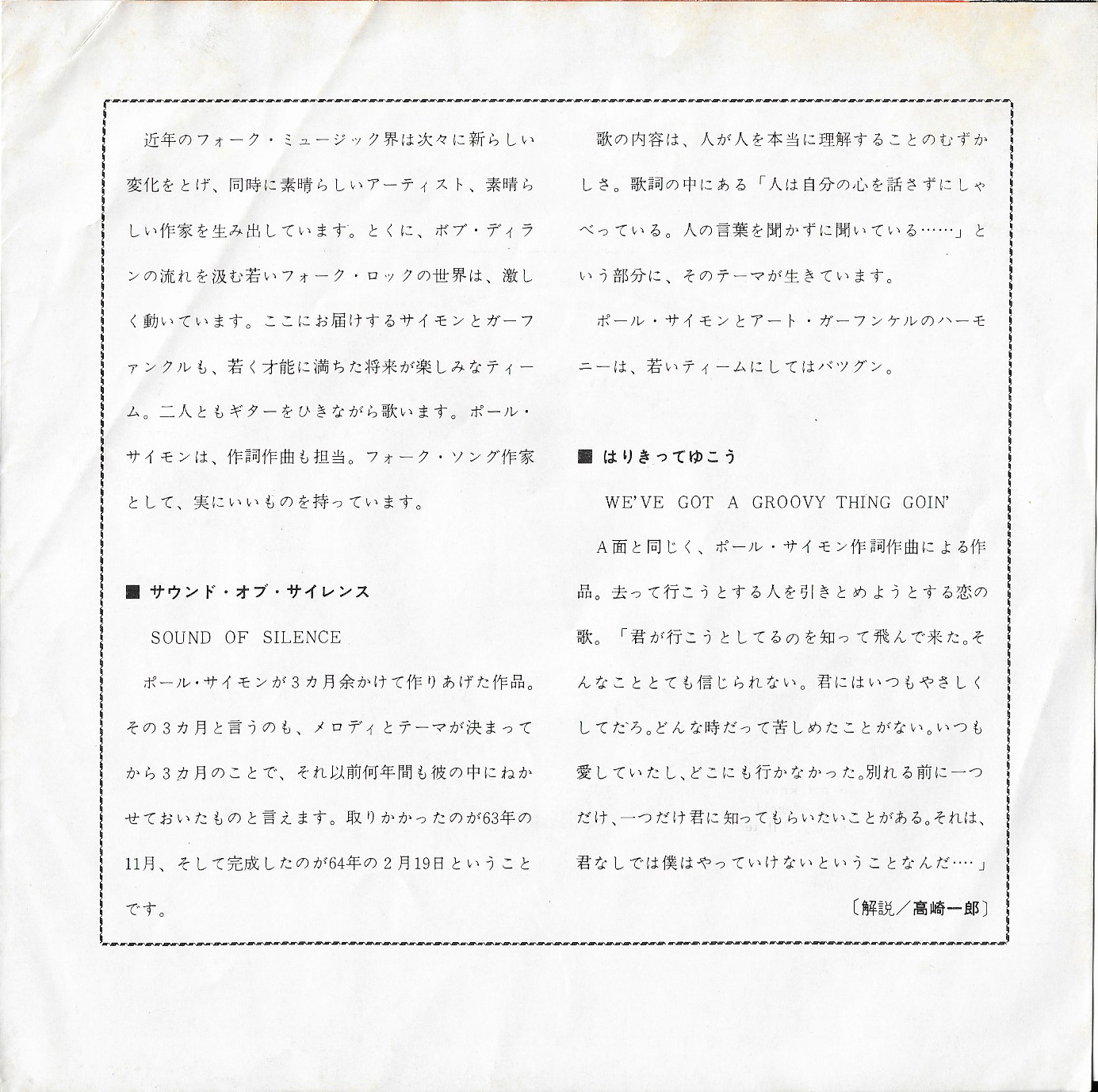
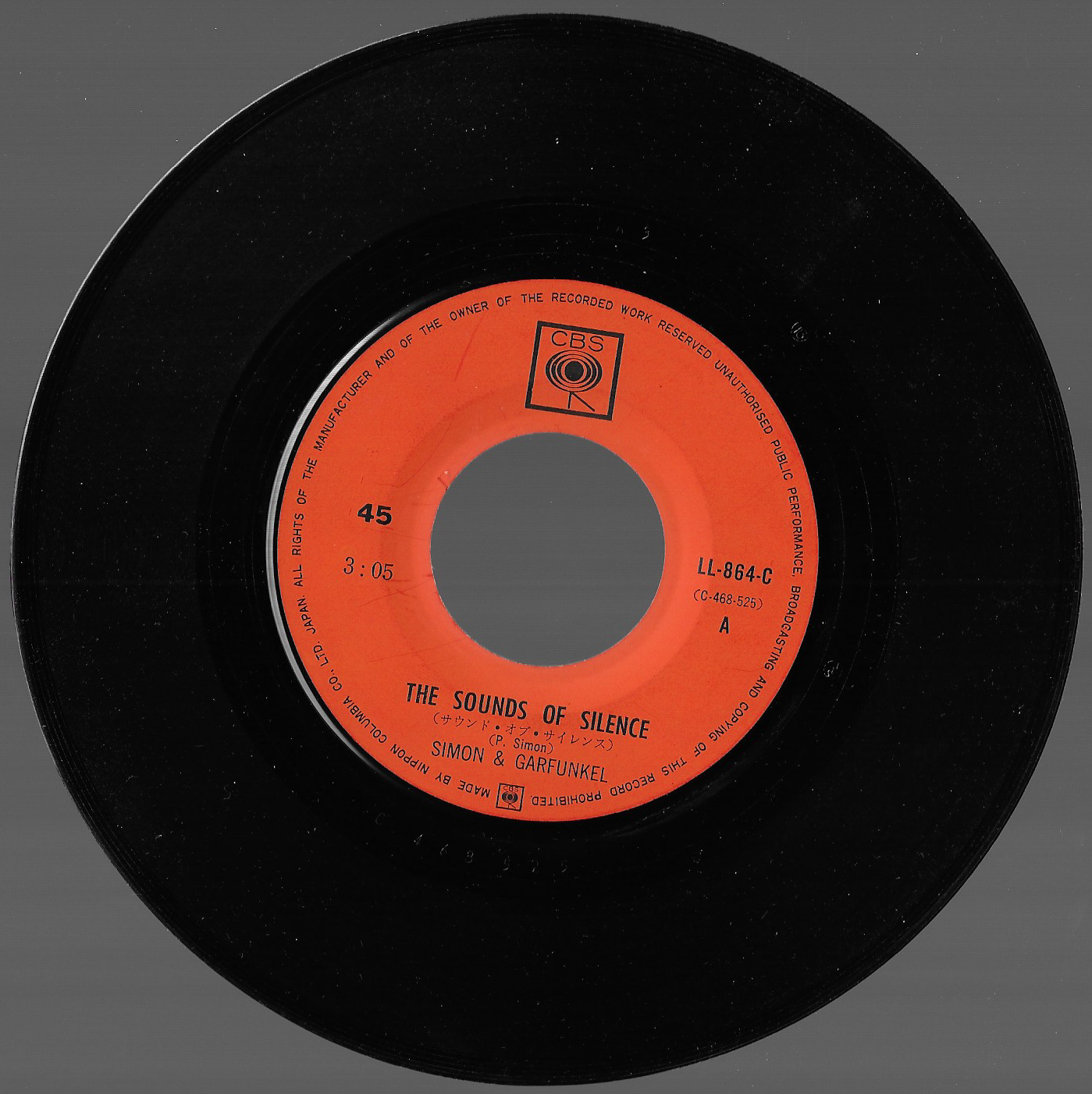
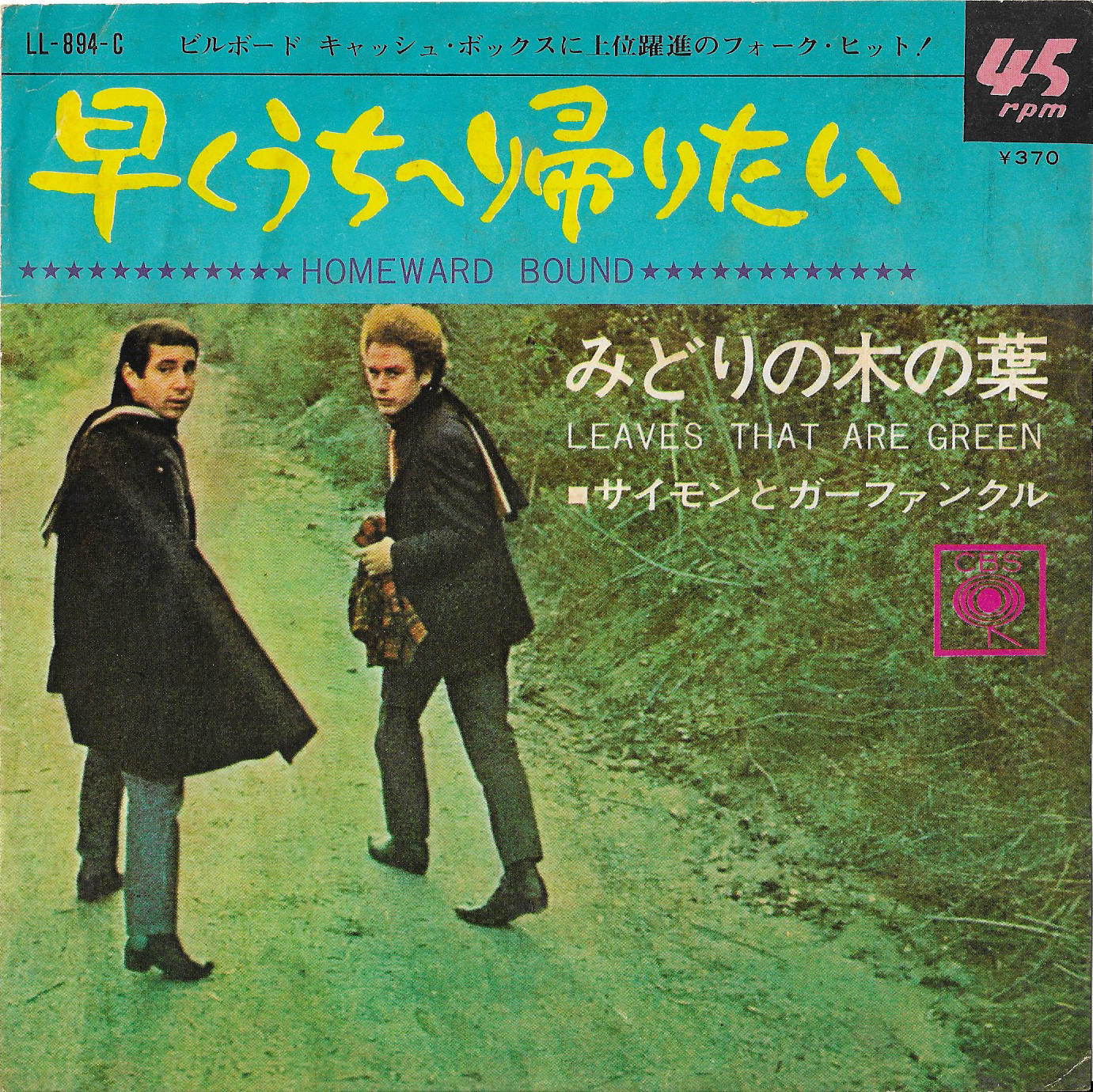
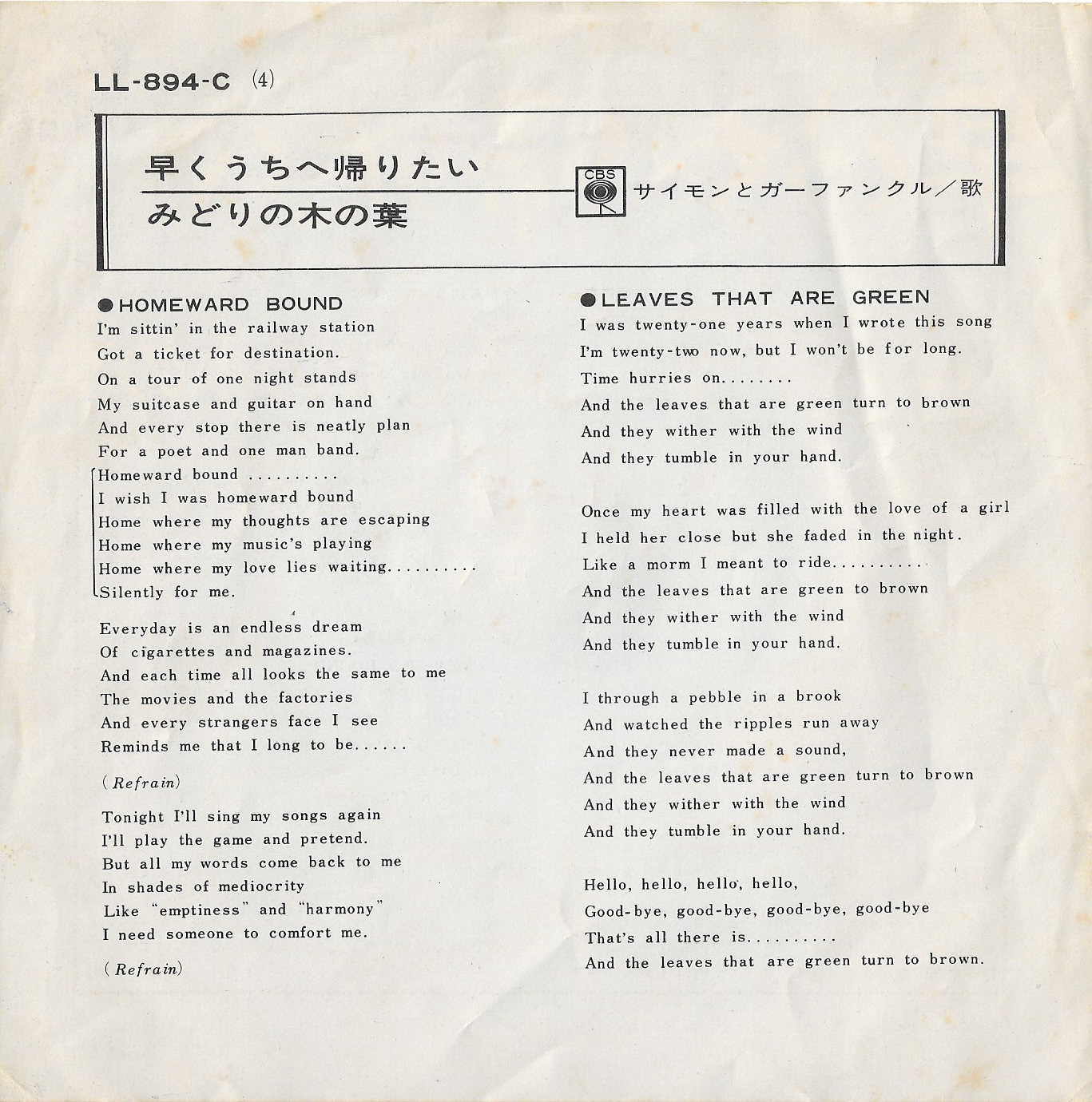
LL-894-C released in March 1966: Homeward Bound / Leaves That Are Green
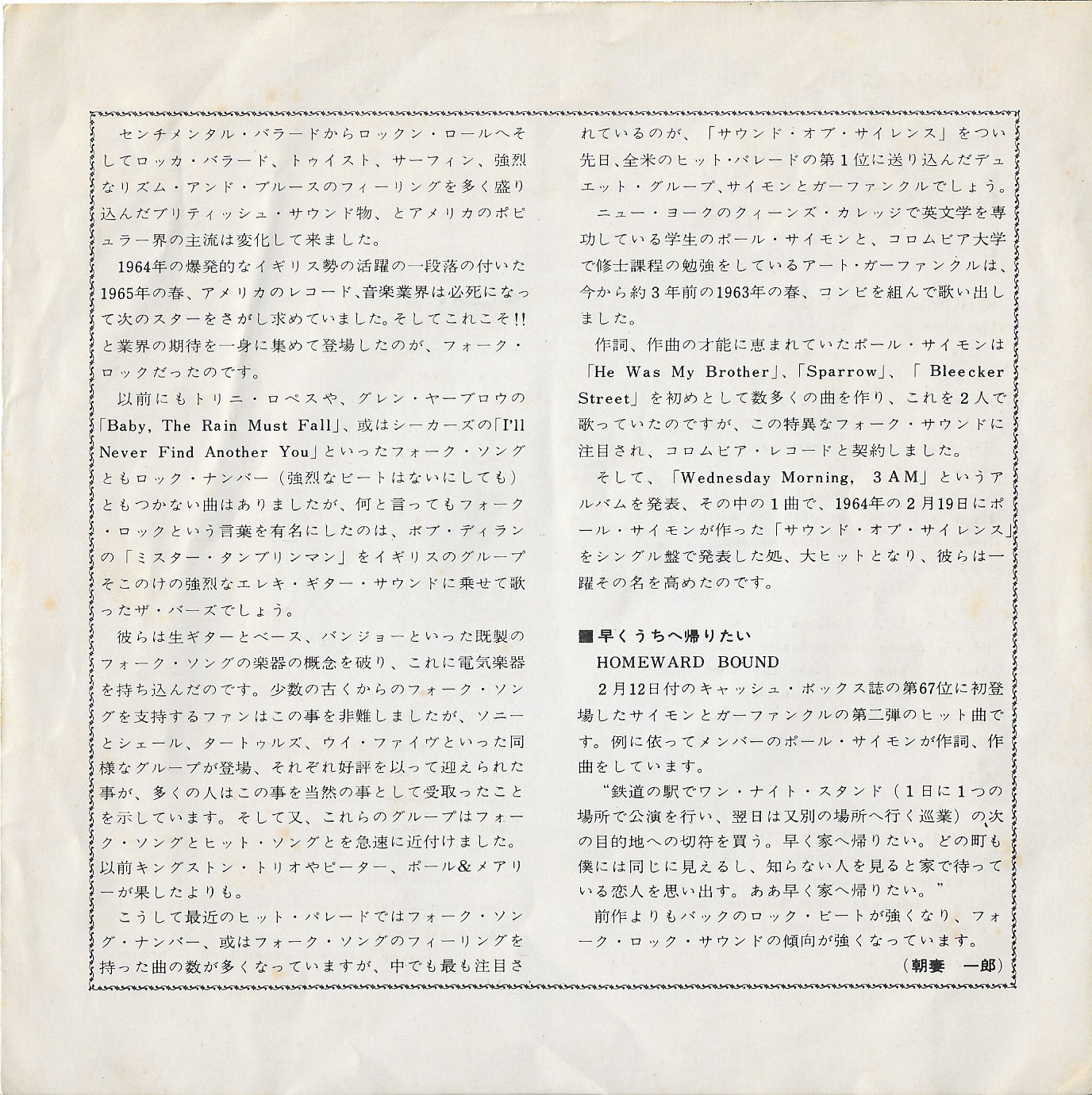
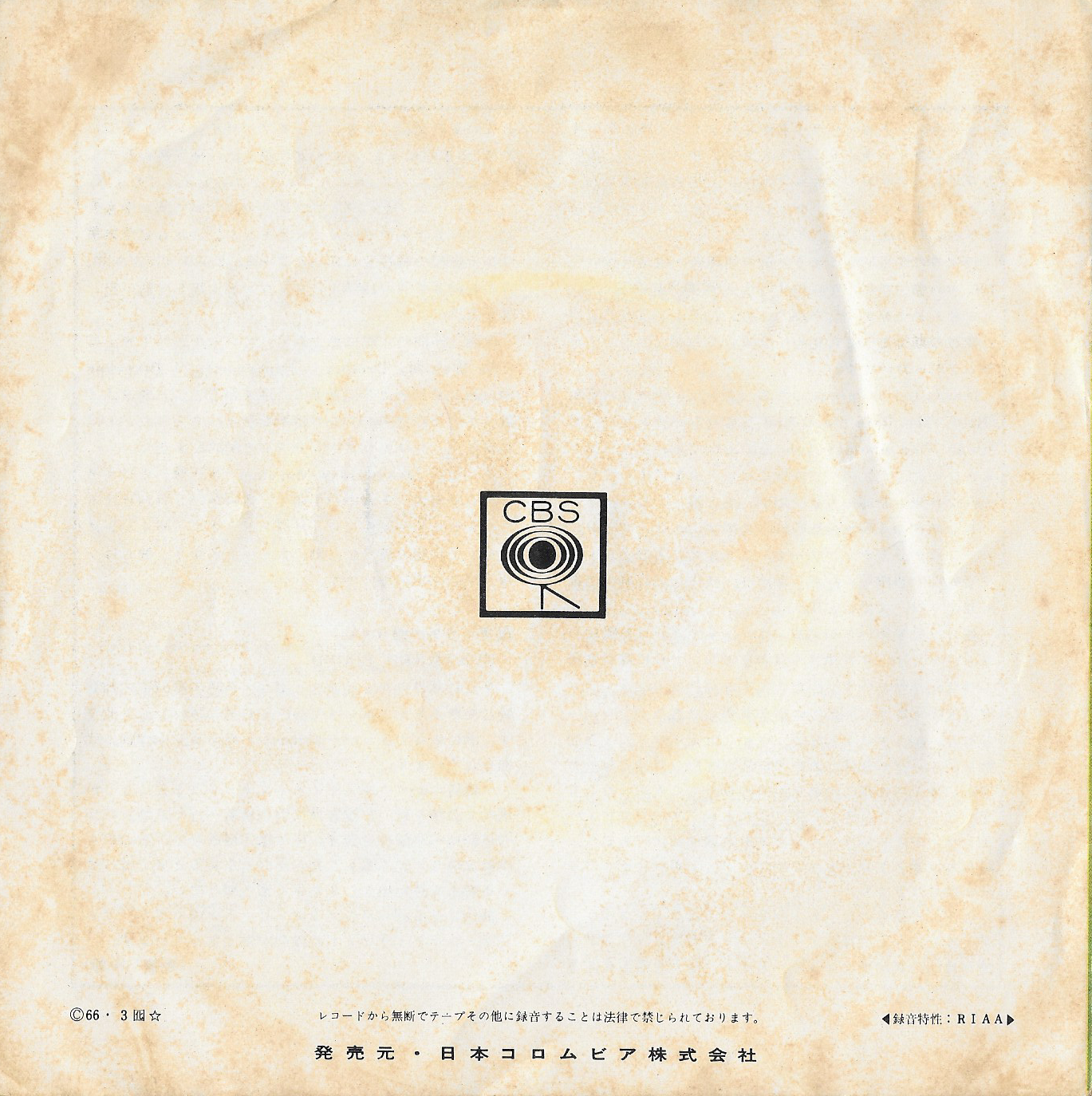
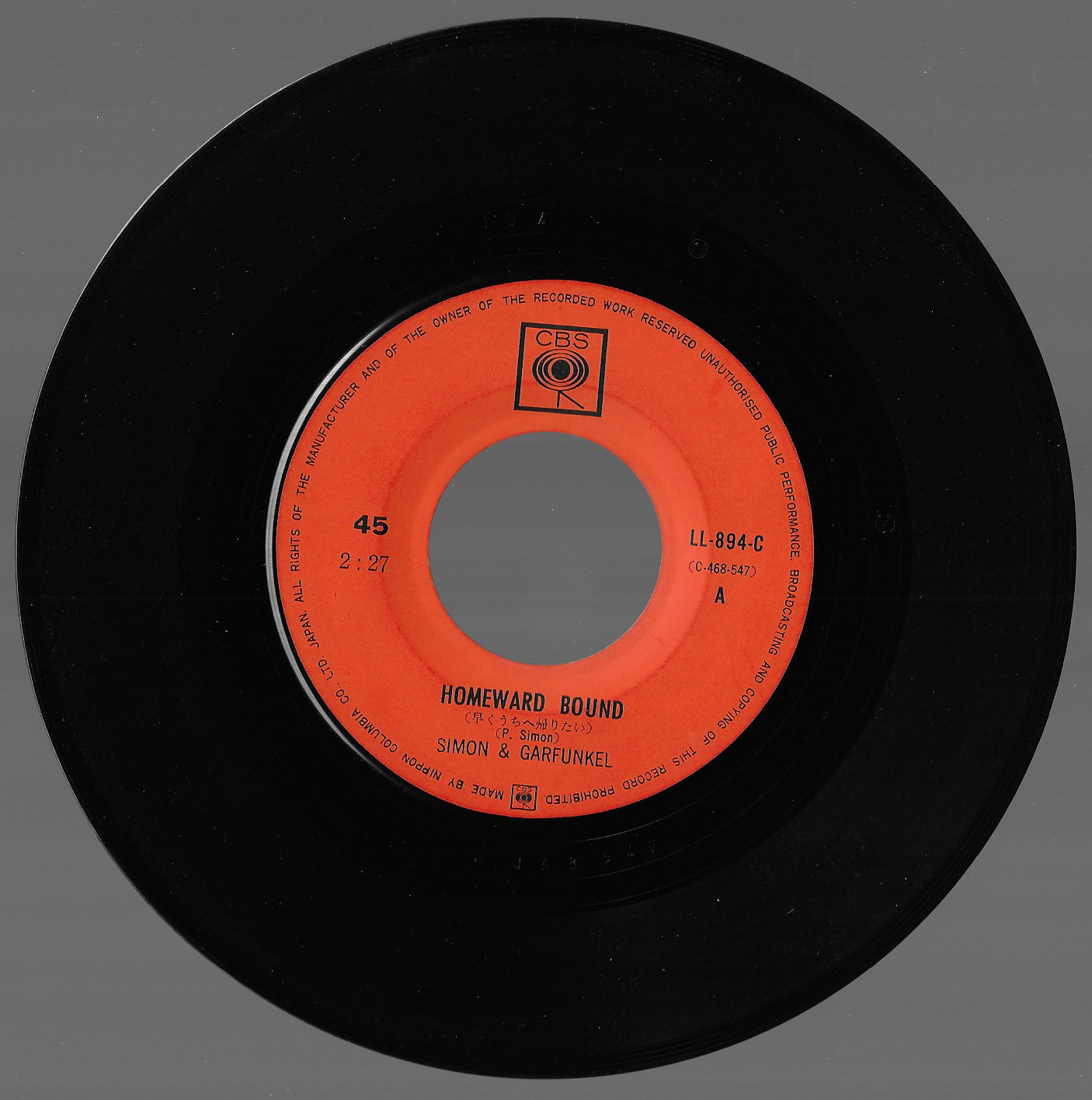
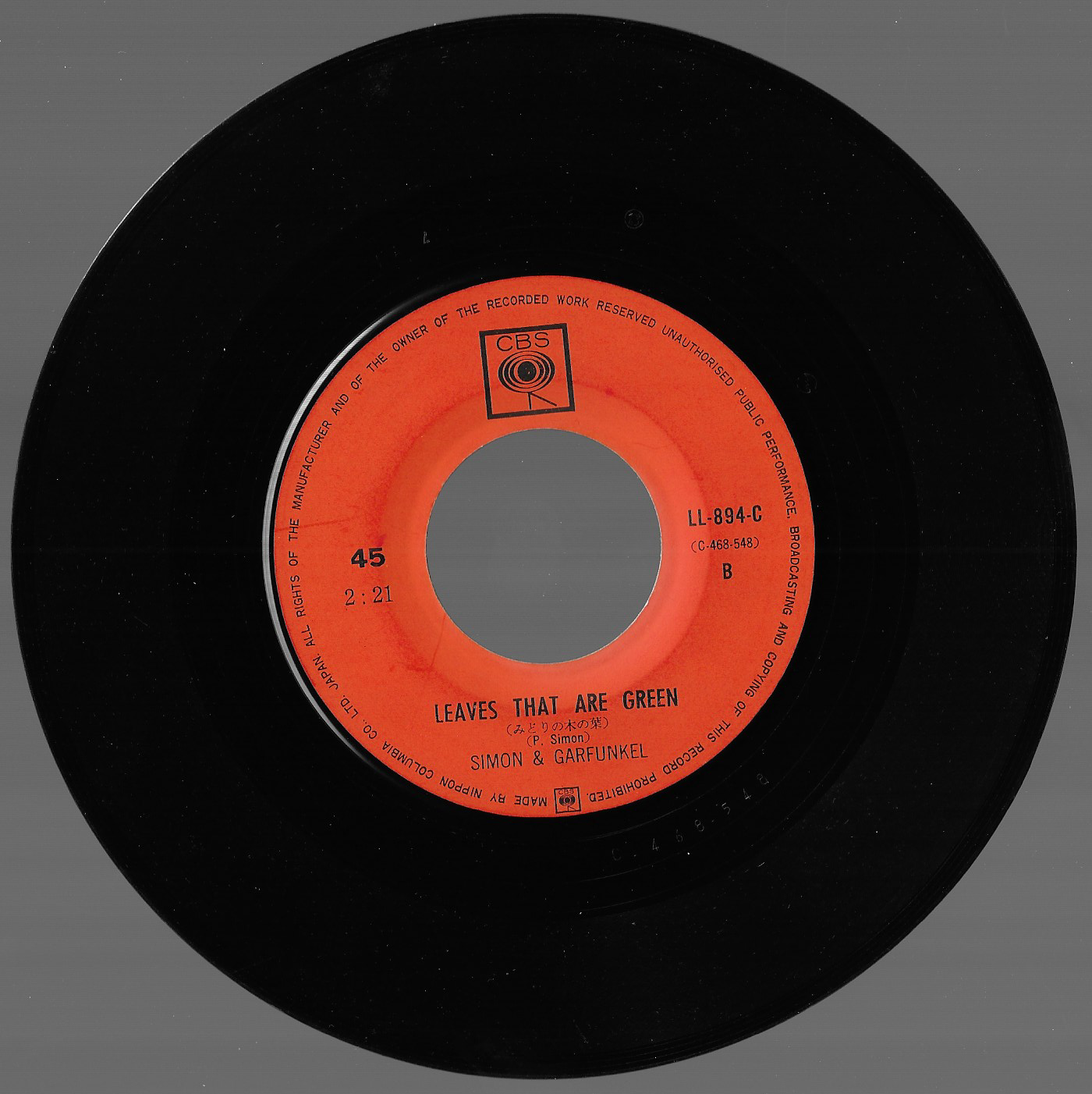
and CBS LL-938-C released in July 1966: I Am A Rock / A Most Peculiar Man
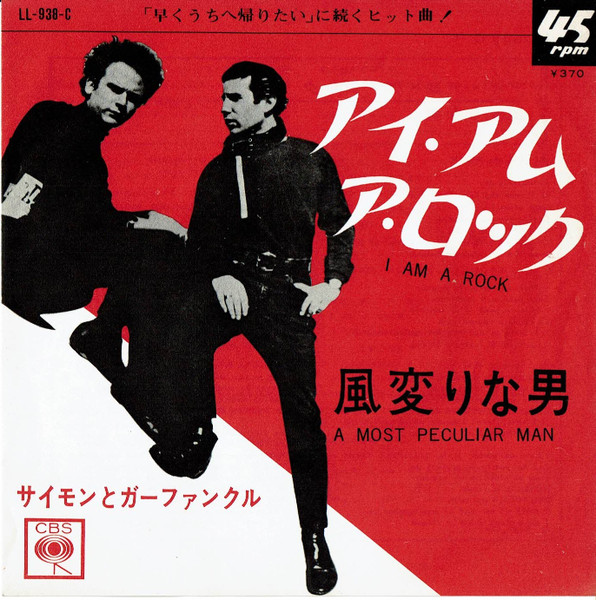
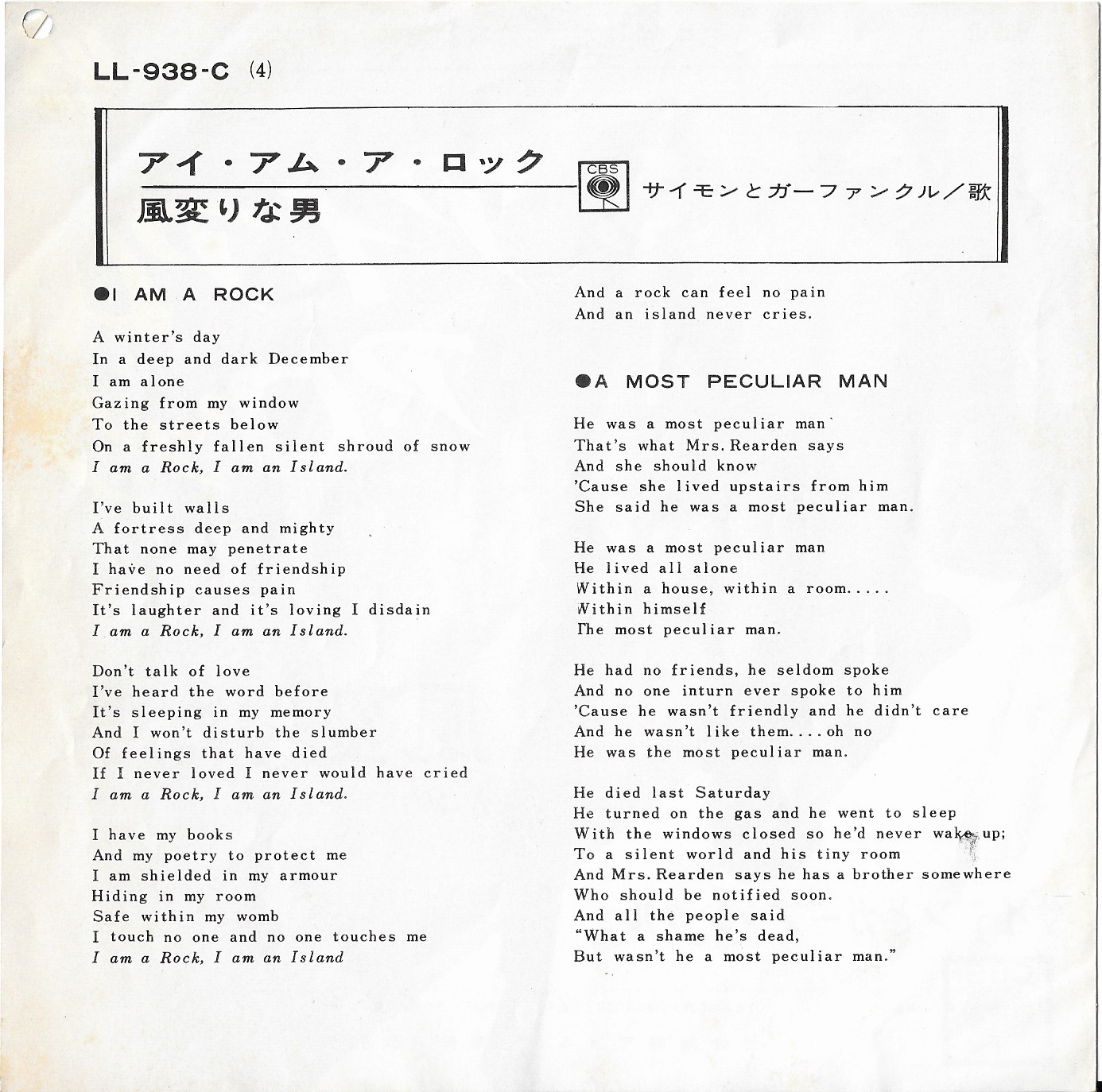
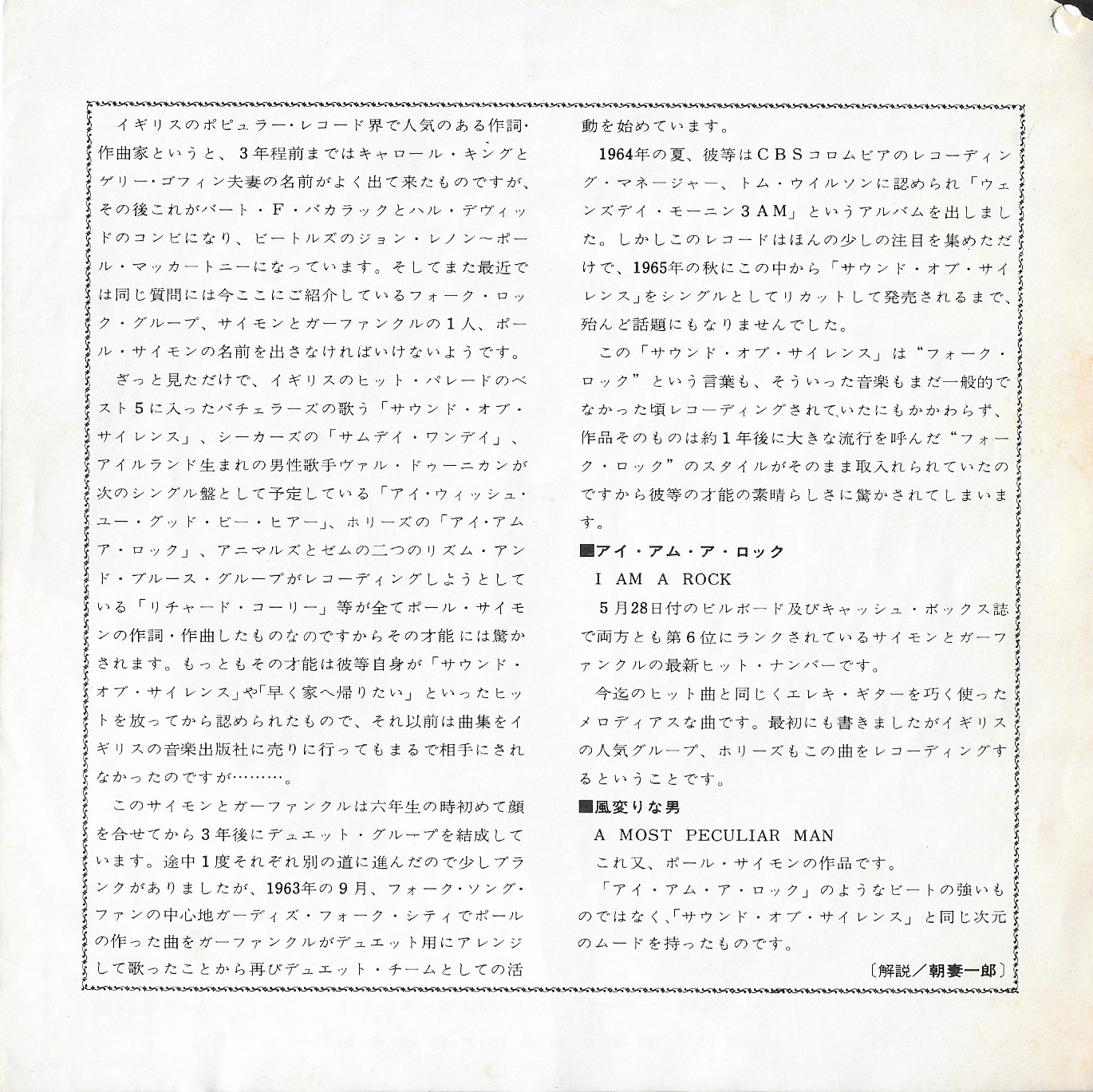

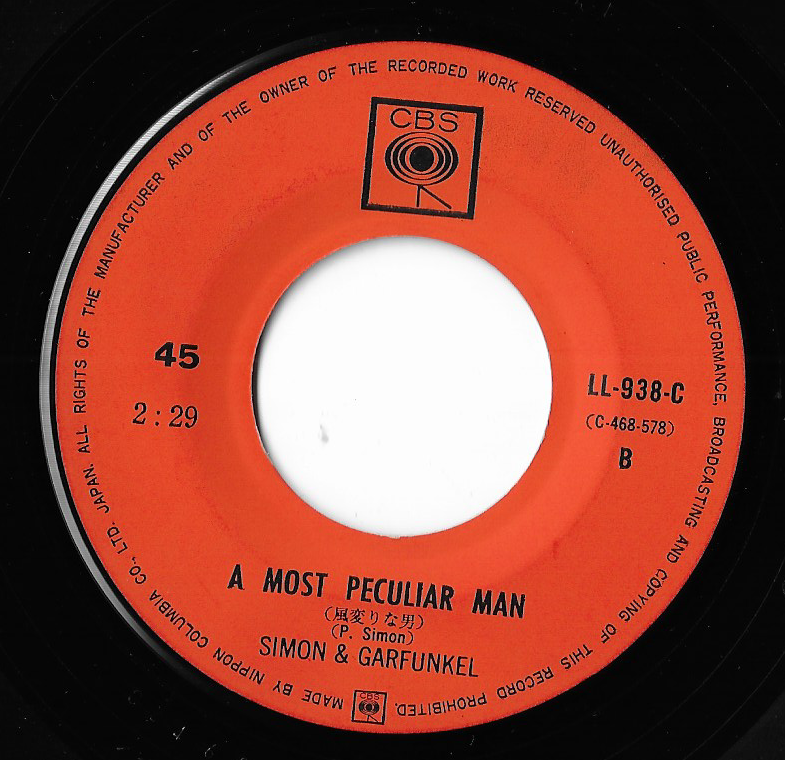
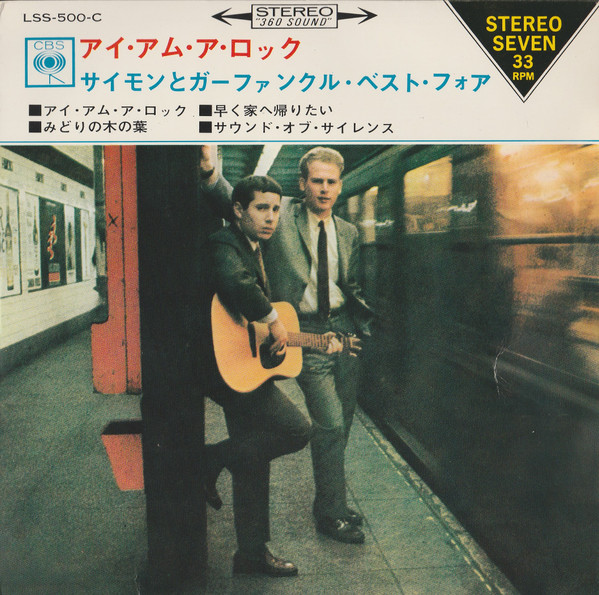
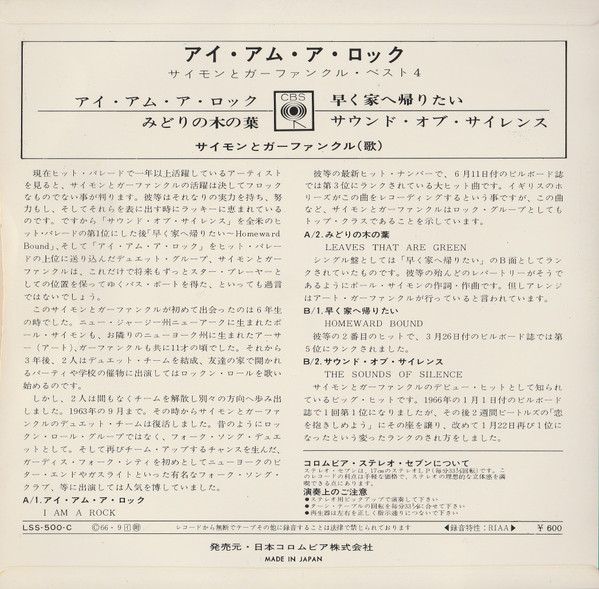
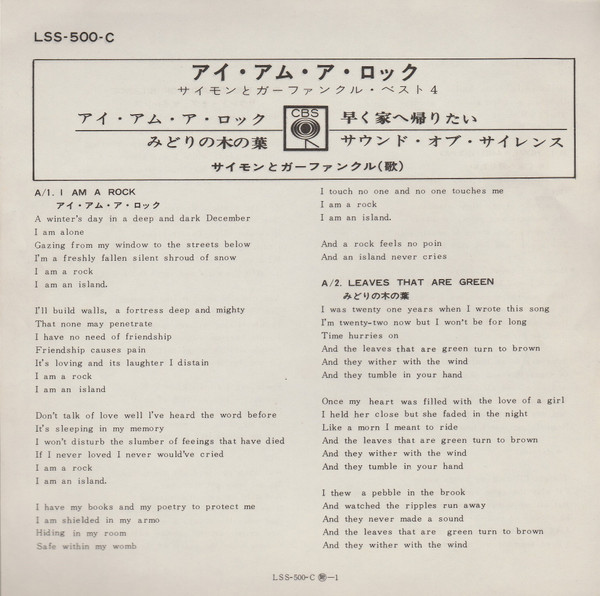
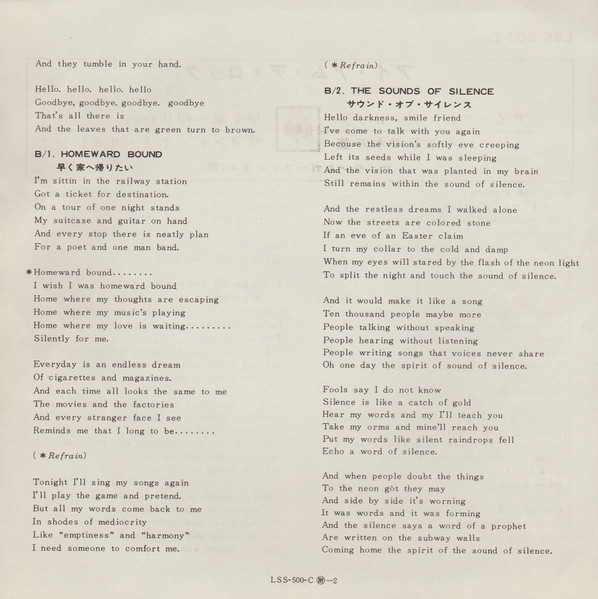
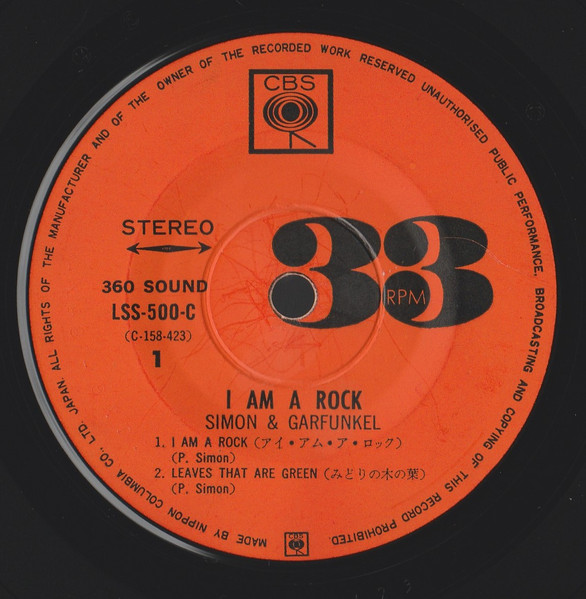
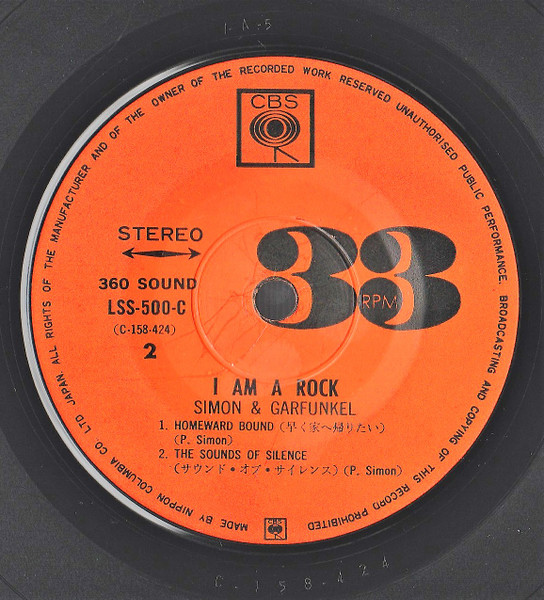
CBS LSS-500-C EP released in September 1966: Simon & Garfunkel – I am a rock
1965-07-26 Highgate Village, Gate House
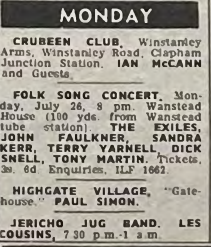

On August 20th 1965 Paul Simon played at:
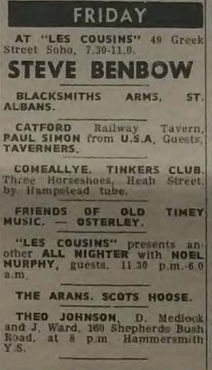
Catford Railway Tavern, which is at: Catford, Catford Rd, London SE6 4RE
In Japan many Simon & Garfunkel records were released using the SX 68 system by Sony. I am not technician, but this is what it is about:
” CBS Sony built their cutting system with the Neumann SX-68 head and their own solid state amps and gave the logo “SX-68 Sound” to the record covers.

It was replaced later by SX 68 II and SX 74.
Here’s a release in this series using SX 68 Sound:

SONX 60195 Simon & Garfunkel – Simon & Garfunkel’s Greatest Hits II SX68Sound
Tracks
A1 Mrs. Robinson 4:02
A2 For Emily, Whenever I May Find Her 2:04
A3 The Boxer 5:07
A4 The 59th Street Bridge Song (Feelin’ Groovy) 1:43
A5 The Sound Of Silence 3:02
A6 I Am A Rock 2:50
A7 Scarborough Fair / Canticle Composed By – Art Garfunkel 3:08
B1 Homeward Bound 2:30
B2 Bridge Over Troubled Water 4:52
B3 America 3:34
B4 Kathy’s Song 3:16
B5 El Condor Pasa (If I Could) Composed By – Daniel A. Robles, Jorge Milchberg 3:06
B6 Bookends 1:16
B7 Cecilia 2:55
This one was released in 1972. But of course CBS Sony started releasing Simon & Garfunkel albums in 1968/1969. Here are two examples:
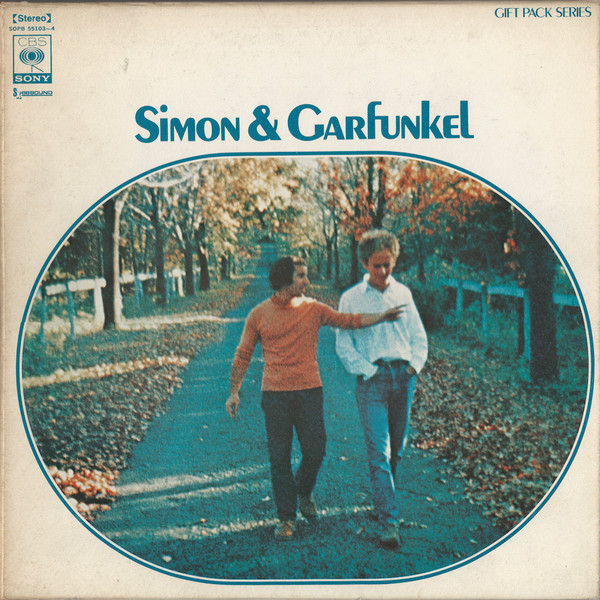
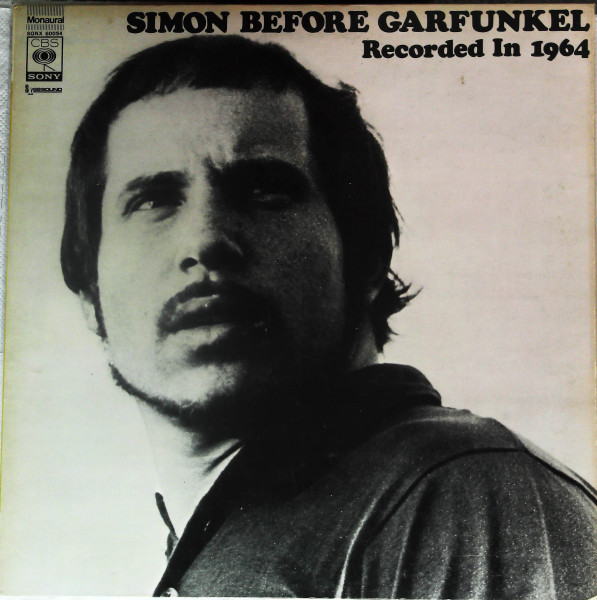
All albums come most of the time in so-called gatefold covers with lots of information (like recording dates). And the sound quality is indeed very good.
The Italy-based (?) Festival label used the same cover as SONX 60195 with that same title, but the tracks were not the same:
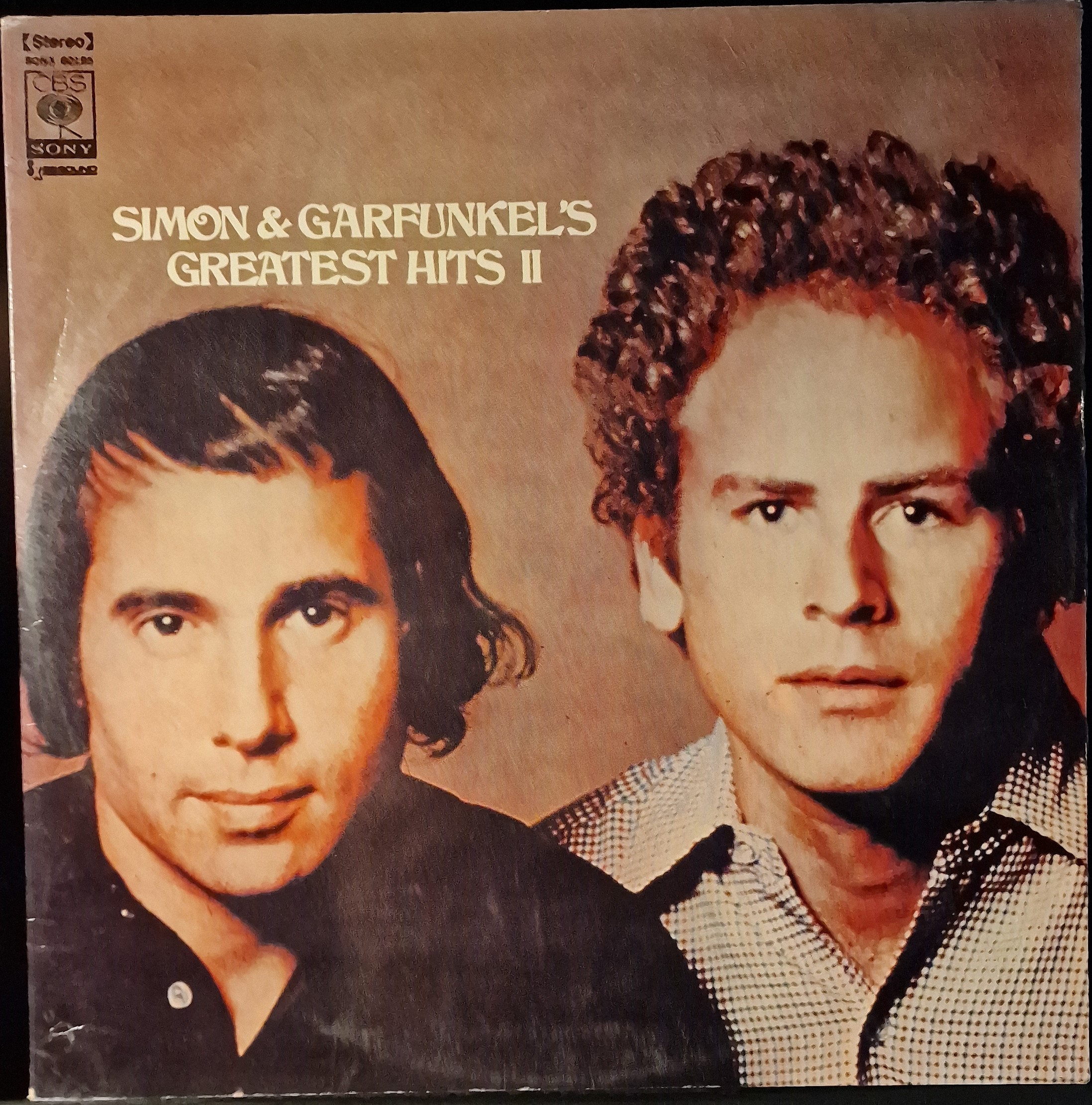
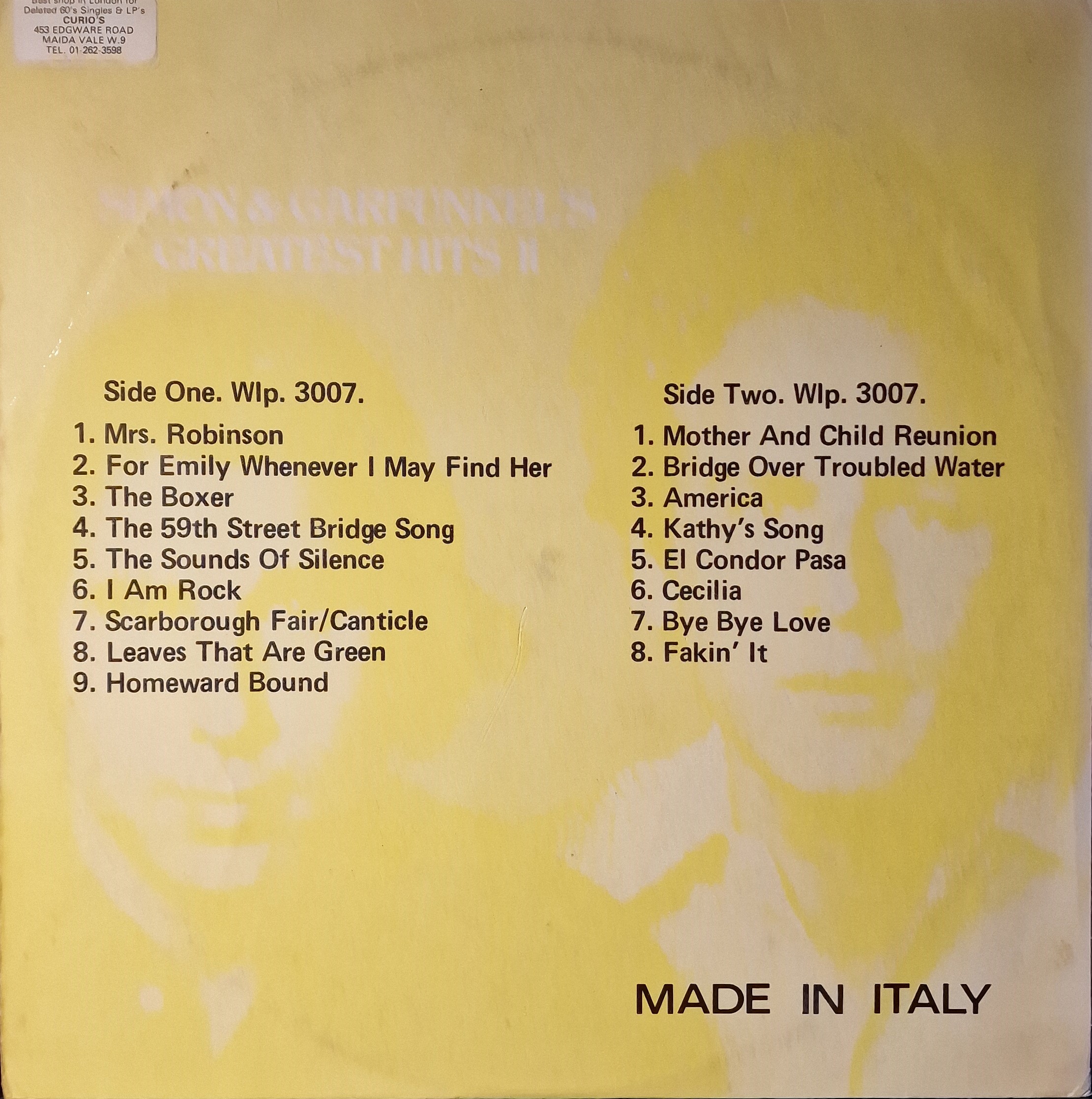

Probably in December of 1966 CBS in Japan released an album called:
“Last night I had the strangest dream” by Simon and Garfunkel.
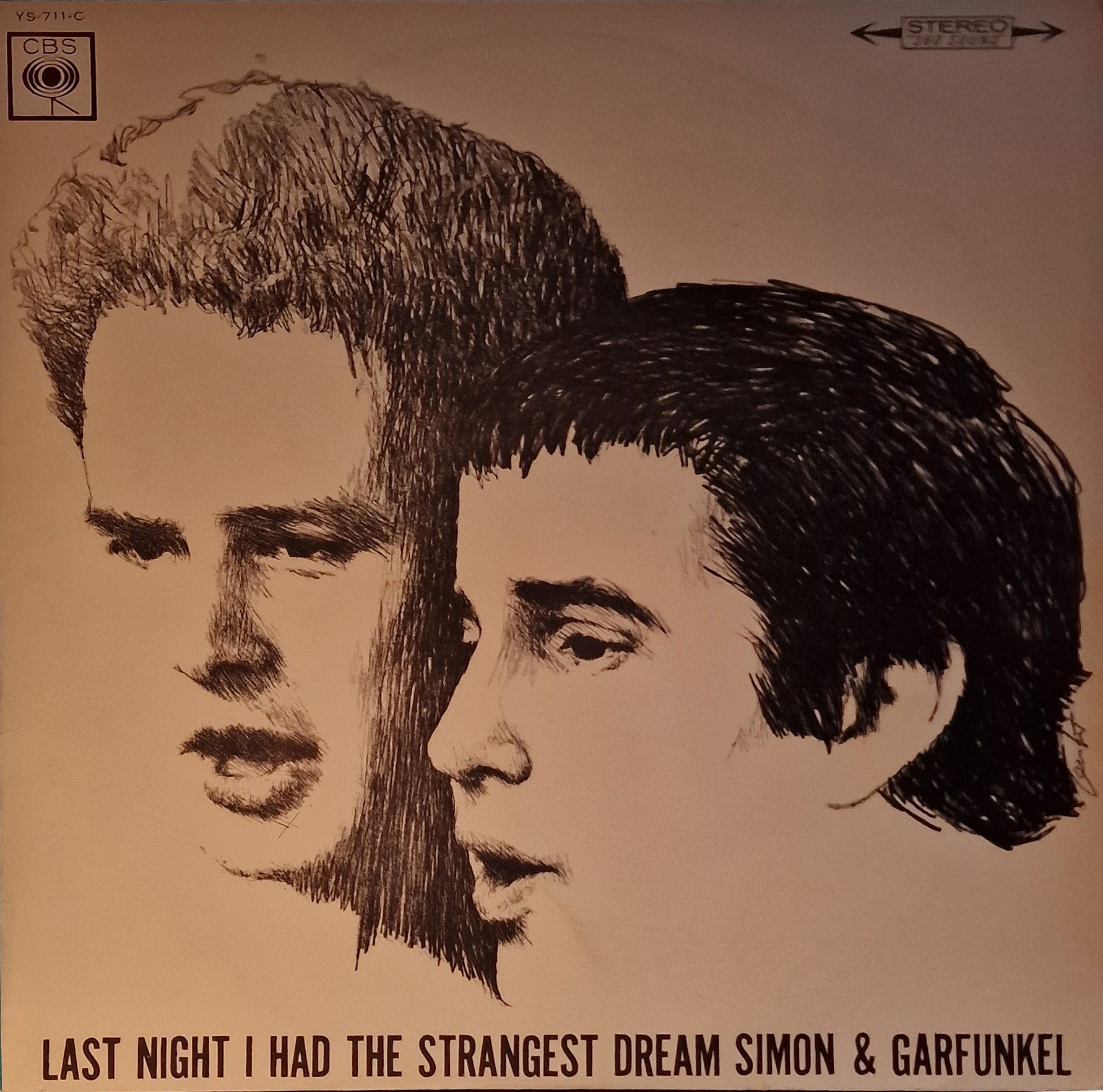
This album was released in 1965 in the US as ” Wednesday Morning, 3 A.M.” The rest of world, at least Europe, had to wait until 1968 for it became available. But here it already is in Japan, late 1966.
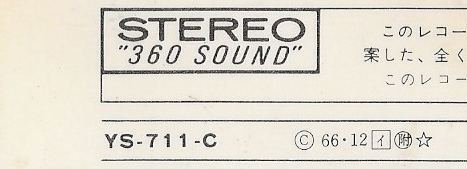
The songs are in different sequence as on the original.
Side A:
Last Night I Had The Strangest Dream
Bleecker Street
Sparrow
Benedictus
You Can Tell The World
The Sounds of Silence
Side B:
The Times The Are A-changing
Pegg-O
Go tell It On The Mountain
The Sun Is Burning
He Was My Brother
Wednesday Morning, 3 A.M.

The album was released with the sketche picture of Simon and Garfunkel, often used on their concertposters in 1966. Not with the usual picture of Simon & Garfunkel in the New York subway.
Released in Japan, CSB YS-711-C
Over the years, since 1957, many Simon & Garfunkel vinyl releases were sold. Both as duo and solo. Countries like (former)Yugoslavia, Italy, France, Holland, Germany, Phillipines etc had their own way of marketing the records of both Simon and Garfunkel with different covers, alternate B-sides, even alternating versions to the ones on the LP-albums.
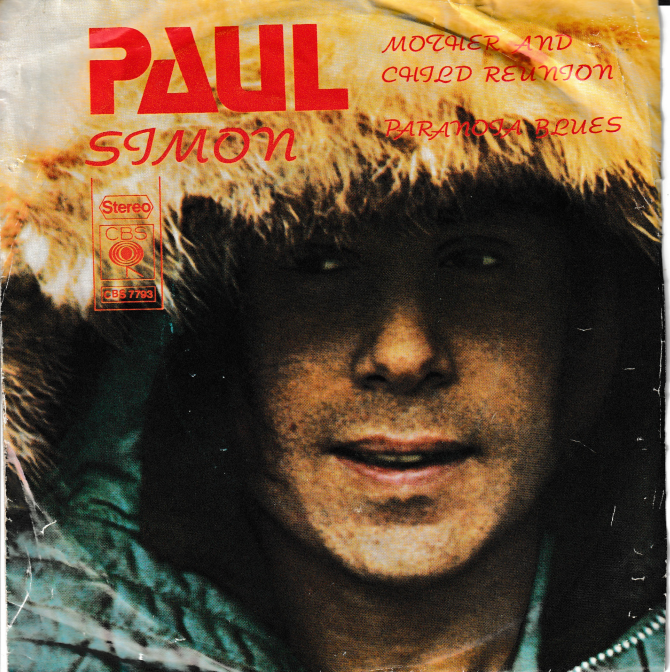
We are now trying to collect all (is that possible) and make these available with pictures here.

Helping is reader, enthusiast and collector Tiziano from Italy. A few of his contributions can be seen now in this post. Much more will be posted soon.
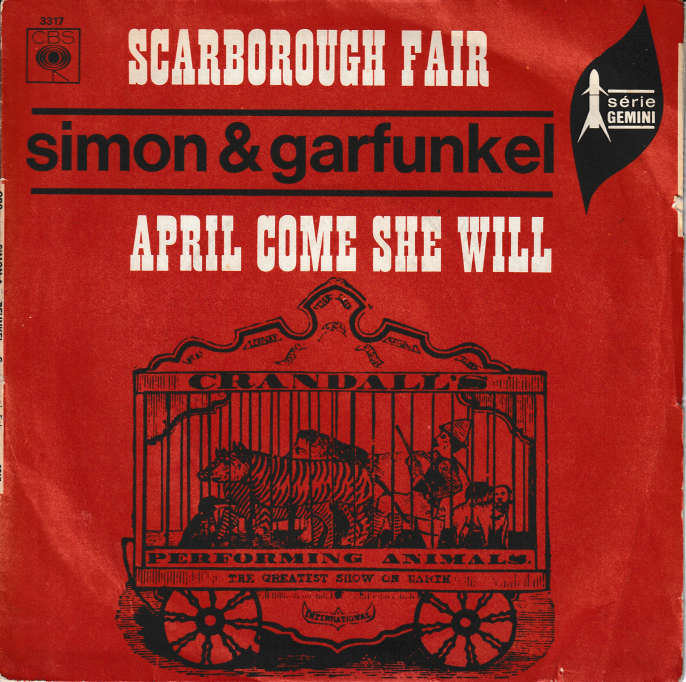
And if you have any cover which you think might be interesting to show here, please do not hesitate to get back to us. Thanks is advance!

Social worker Judith Piepe was very fond of Paul’s music as we know and took care of him a lot.
It was Piepe who managed to get him to sing his songs in the BBC radio – program “Five To Ten”.
Here’s the schedule of the broadcasts:
1965-03-08 He Was My Brother
1965-03-09 A Church Is Burning
1965-03-10 On The Side Of A Hill
1965-03-11 Sparrow
1965-05-01 The Sound Of Silence
1965-05-08 I Am A Rock
1965-05-15 A Most Peculiar Man
1965-05-22 Bleeker Street
1965-07-19
1965-07-20
1965-07-21
1965-07-22
For the last 4 dates we have no information which song(s) he sang.
In the list of his performances in 1965 we have also listed a Five To Ten performance as early as January 21st, but this now has become uncertain.
The performances in May ‘ 65 were commented by Judith Piepe.
 Paul Simon - 'Time it was...it was'