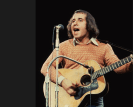

Coming March 17 ” In Restless Dreams”
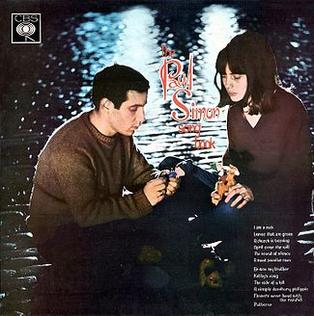
The album was recorded in the summer of 1965. Earlier that year Paul Simon was to be heard on the BBC Light morning radio programm called “ Five to Ten ” and listeners were looking for records to buy from this singer they had heard. There was none available in the UK. So CBS England got interested in doing a record with Paul Simon.
Under the guidance of producers Reginald Warburton and Stanley West 12 songs made it to the album. The recordings came from the following 3 days: June 17, 1965, June 23, 1965 and July 5, 1965.
Many takes were done and it resulted in the use of the following takes:
from the June 17th session:
I am a rock [ Take 4 ]
Leaves that are green [ Take 11 ]
A most pecliar man [ Take 4 ]
Kathy’s song [ Take 1 ]
Patterns [ Take 3 ]
from the June 23 session:
April come she will [ Take 2 ]
The sound of silence [ Take 1 ]
from the July 5 session:
A church is burning [ Take 3 ]
He was my brother [ Take 2 ]
The side of a hill [ Take 4 ]
A simple desultory Philippic etc [ Take 1 ]
Flowers never bend with the rainfall [ Take 8 ]
The above info come from CD release of the album, which also has 2 bonus tracks, from the June 23 session:
A church is burning [ Take 4 ]
I am a rock [ Take 6 ]
As you can see a Take 4 of ‘A church is burning’ was done before Take 3, which was recorded almost 2 weeks later.
Probably there will have been more days in the studio before June 17th, when he recorded down take 11 of “Leaves that are green”. We don’t know this for sure, so we can only assume it. Just like it can be assumed that there were more session days after July 5?
A few notes about earlier recordings of some of the songs that appeared on the “Songbook” album:
Topic Records:
In [early] 1964 Paul Simon also recorded a version of ‘The Sound Of Silence‘ and ‘April Come She Will‘ for the UK label Topic Records. The songs was never used maybe because Paul Simon was under contract of Columbia and / or CBS? The planned album “New Voices” with, besides Simon, Leon Rosselson, Sydney Carter and Cyril Tawney never saw the light.
Oriole Records:
Oriole Records in the UK released a 45rpm single with Carlos Dominquez and He Was My Brother in 1964 [May 8th] as well. Not under his real name, but Jerry Landis:

This was also released [ already in 1963 ] in the US on the Tribute label [#128] using the name of Paul Kane.
If you wanted to gain in on the success in the folk-circuit, having to us other names because of earlier contracts, this would and did not help.
Through the years I have collected many version of The Paul Simon Songbook. Released in 1965 in the UK and later also in other countries when Simon & Garfunkel became more and more famous.
The cover is most of the time (!) like this:

Columbia Records in Canada also released the album but with a totally different cover and album-title:
Columbia EL 111 [Monaural]:

Titled “The Sounds Of Simon” and sub-titled “The Paul Simon Songbook”.
According to Discogs it was released in 1965.
NComing up part 2: The UK / European releases.
The near full moon and rolling clouds set behind a silhouette of palms seemed to capture the gentle and poetic nature of lyrics carefully crafted over the years by legendary singer and songwriter Paul Simon.
The musician, known for his lyrical savvy, shared a repertoire of music that began with the lyrics “The first thing I remember” from his popular 1980 hit “Late in the Evening.”
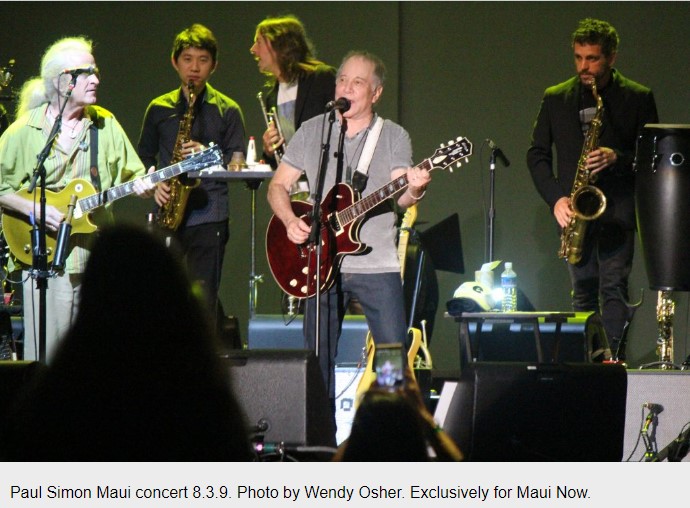
The night featured favorites from a sustained musical career that has spanned generations. Fans of Simon’s early career with Garfunkel were treated to a backstory on the creation of the song “Bridge Over Troubled Water.” “Some songs come through you as a conduit. It would be yours, but not yours,” explained Simon who wrote the song when he was just 28. “Artie would sing it… then Aretha Franklin. Tonight I’m taking it back,” he said.
His eclectic lyricism is apparent and crafted like a well placed puzzle as illustrated in “Graceland”: “The Mississippi Delta was shining like a National guitar; I am following the river, Down the highway, Through the cradle of the civil war.”
His creative process is organic and in the case of “René and Georgette Magritte with Their Dog after the War” the title came before the actual song. Simon explained that he was going to a festival in Northern California that Joan Baez was at. He pulled a book off her shelf and happened upon a photo of the surrealist painter with his wife and dog, and thought, “What a great title of a song.” In writing it, he brought the styling of vocal groups like The Penguins, The Five Satins and other doo-wop and R&B groups of the time, “And that’s how this song came to be,” Simon explained.
Simon also performed a handful of hits from his 1986 album Graceland and several signature pieces from his 1990 album Rhythm of The Saints, featuring accompaniment by west African guitar player Biodun Kuti from Nigeria and back up from a 14 piece band which included horns, strings and percussion.
In a polite, yet encouraging tone, Simon said, “If you feel like dancing please be my guest, but keep in mind that the people behind you may disagree… I don’t mind,” he said with a smile.
The casual concert served as a fundraiser for the Auwahi Forest Restoration Project and Kua‘āina Ulu ‘Auamo–two local organizations dedicated to environmental welfare and to preserving species biodiversity in Hawai‘i. “Mahalo for supporting the causes we are championing this evening,” Simon said to the packed crowd gathered at the Amphitheater and Yokouchi Pavilion.
During a short set, Simon also welcomed friend and special guest, Keola Beamer to the stage. The multi-nominated Grammy slack-key musician sang a “Seabreeze” duet with Simon and exited with the iconic “Honolulu City Lights.” Beamer called the composition “a song about you, about me, about the people that love Hawaiʻi,” Simon included, who now owns a home on Maui
Simon is set to perform again tonight for the second of two concerts at the Maui Arts & Cultural Center. The Maui concerts are the only ones Simon has planned in Hawaiʻi and mark the first Hawaiʻi shows since Simon & Garfunkel appeared at the Blaisdell Arena more than 50 years ago.
In two hours and 20 songs, Simon traveled back in time to his 1964 album Wednesday Morning 3 A.M., ending the concert with a greeting… “Hello Darkness.” “Thank you so much I am so happy to be here,” said Simon as he exited the stage.
1965-07-26 Highgate Village, Gate House
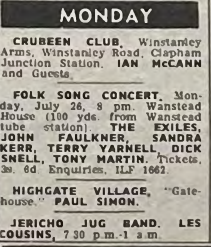

On August 20th 1965 Paul Simon played at:
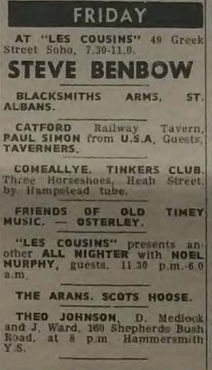
Catford Railway Tavern, which is at: Catford, Catford Rd, London SE6 4RE
In Japan many Simon & Garfunkel records were released using the SX 68 system by Sony. I am not technician, but this is what it is about:
” CBS Sony built their cutting system with the Neumann SX-68 head and their own solid state amps and gave the logo “SX-68 Sound” to the record covers.

It was replaced later by SX 68 II and SX 74.
Here’s a release in this series using SX 68 Sound:

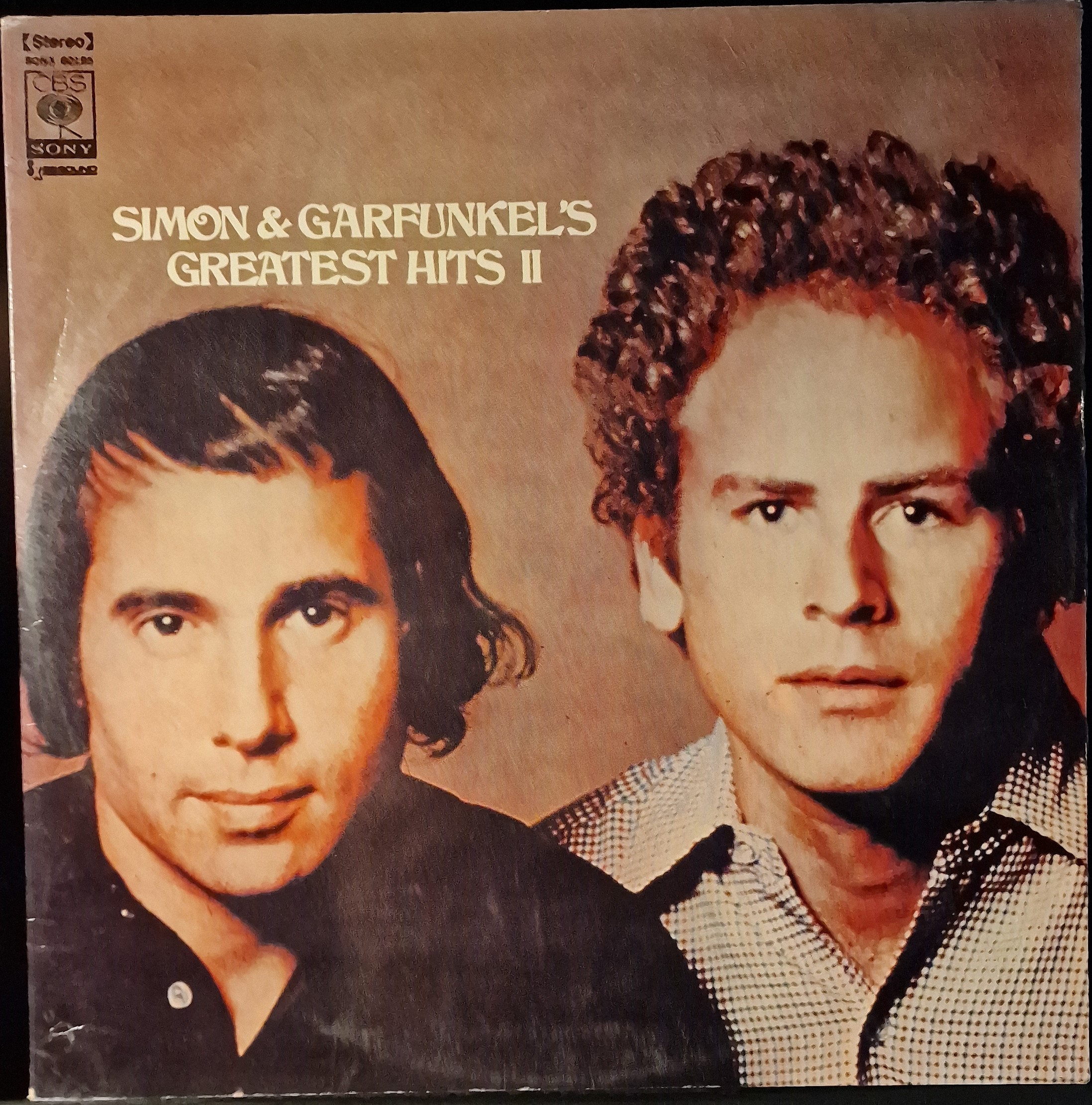
SONX 60195 Simon & Garfunkel – Simon & Garfunkel’s Greatest Hits II SX68Sound
Tracks
A1 Mrs. Robinson 4:02
A2 For Emily, Whenever I May Find Her 2:04
A3 The Boxer 5:07
A4 The 59th Street Bridge Song (Feelin’ Groovy) 1:43
A5 The Sound Of Silence 3:02
A6 I Am A Rock 2:50
A7 Scarborough Fair / Canticle Composed By – Art Garfunkel 3:08
B1 Homeward Bound 2:30
B2 Bridge Over Troubled Water 4:52
B3 America 3:34
B4 Kathy’s Song 3:16
B5 El Condor Pasa (If I Could) Composed By – Daniel A. Robles, Jorge Milchberg 3:06
B6 Bookends 1:16
B7 Cecilia 2:55
This one was released in 1972. But of course CBS Sony started releasing Simon & Garfunkel albums in 1968/1969. Here are two examples:
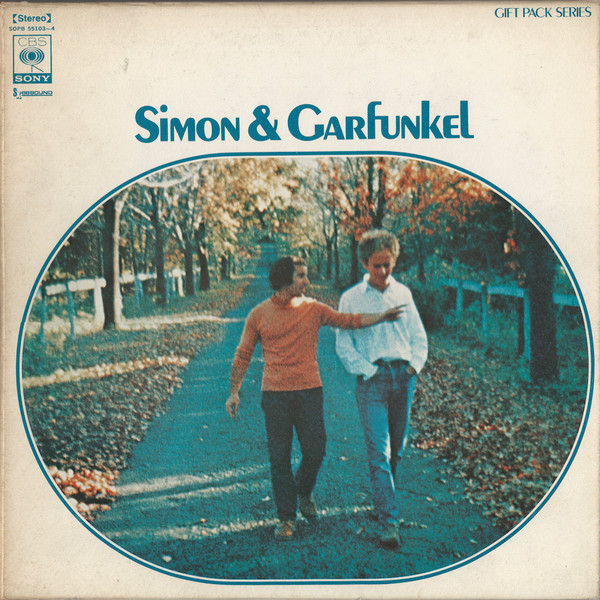
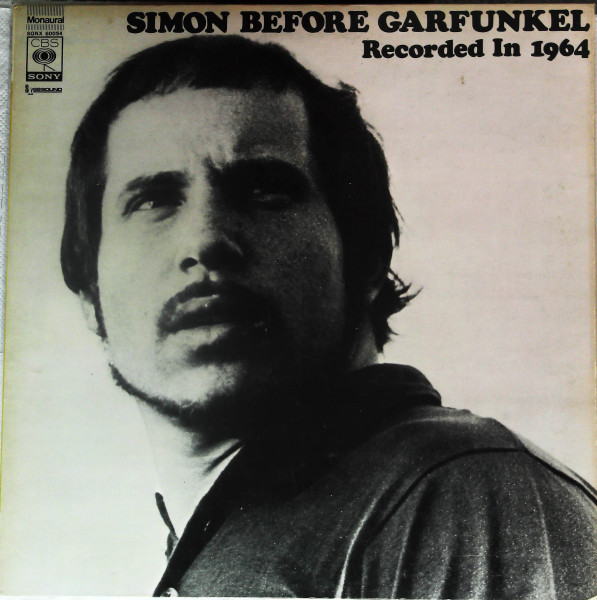
All albums come most of the time in so-called gatefold covers with lots of information (like recording dates). And the sound quality is indeed very good.
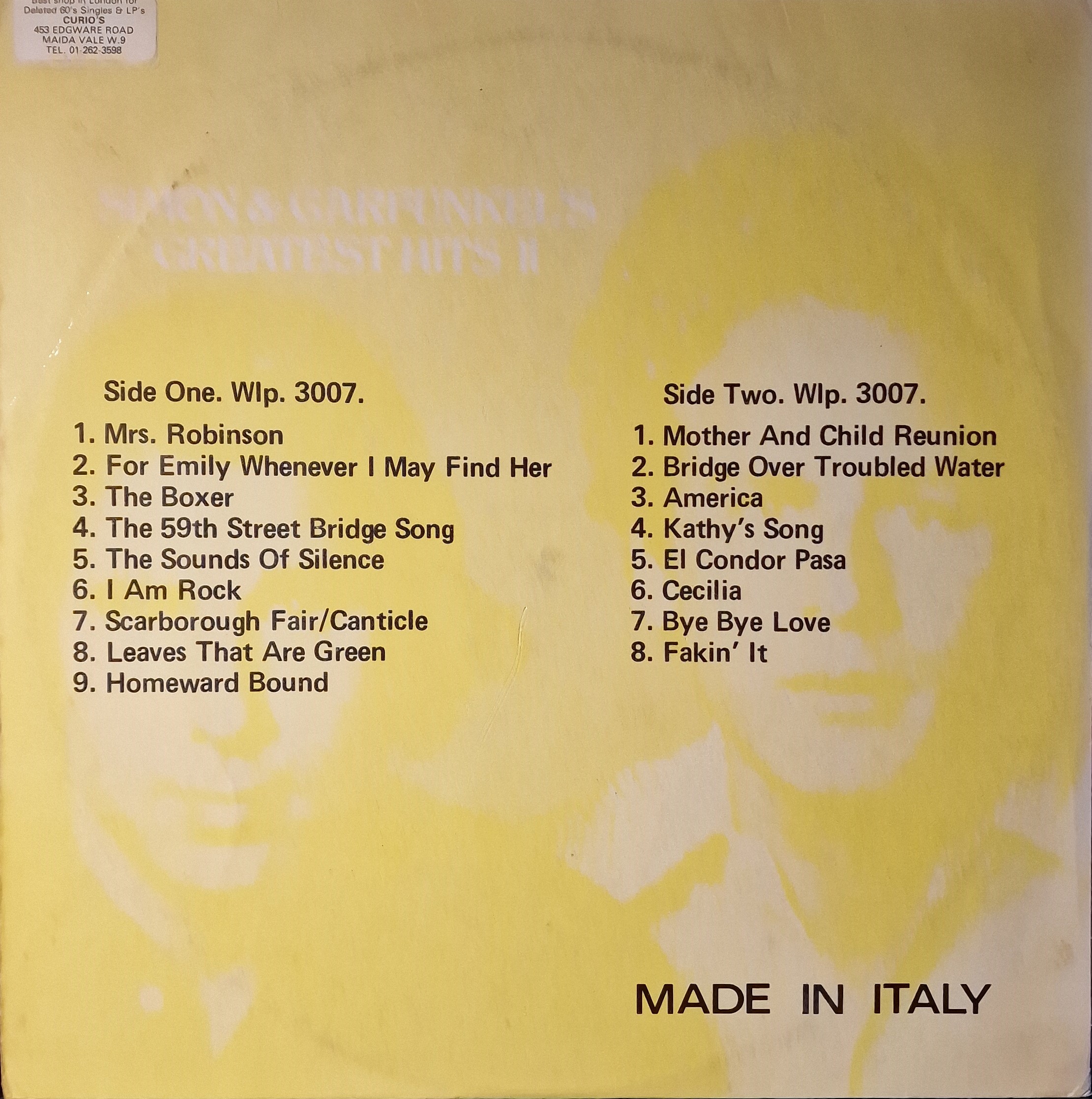
The Italy-based (?) Festival label used the same cover as SONX 60195 with that same title, but the tracks were not the same:

Social worker Judith Piepe was very fond of Paul’s music as we know and took care of him a lot.
It was Piepe who managed to get him to sing his songs in the BBC radio – program “Five To Ten”.
Here’s the schedule of the broadcasts:
1965-03-08 He Was My Brother
1965-03-09 A Church Is Burning
1965-03-10 On The Side Of A Hill
1965-03-11 Sparrow
1965-05-01 The Sound Of Silence
1965-05-08 I Am A Rock
1965-05-15 A Most Peculiar Man
1965-05-22 Bleeker Street
1965-07-19
1965-07-20
1965-07-21
1965-07-22
For the last 4 dates we have no information which song(s) he sang.
In the list of his performances in 1965 we have also listed a Five To Ten performance as early as January 21st, but this now has become uncertain.
The performances in May ‘ 65 were commented by Judith Piepe.
Paul Simon Confronts Death, Profoundly, on ‘Seven Psalms’
The 81-year-old songwriter ruminates on mortality, faith and meaning in an album that could be a farewell.
What do songwriters do when they feel death approaching? As time runs out, some choose to spend it by determinedly creating music to outlive them.
“Seven Psalms” sounds like a last testament from the 81-year-old Paul Simon. It’s an album akin to David Bowie’s “Blackstar” and Leonard Cohen’s “You Want It Darker,” which those songwriters made as mortality loomed; they each died days after the albums were released.
Their generation of singer-songwriters has dedicated itself to chronicling their entire lives, biographically and metaphorically, from youth through last words. “Blackstar” was turbulent and exploratory; “You Want It Darker” was stoically bleak. “Seven Psalms” stays true to Simon’s own instincts: observant, elliptical, perpetually questioning and quietly encompassing.
The album is constructed as a nearly unbroken 33-minute suite, nominally divided into seven songs that circle back to recurring refrains. It has places of lingering contemplation and it has sudden, startling changes; its informality is exactingly planned.
Simon begins the album in his most casual tone. Over calmly precise and rhythmically flexible guitar picking, he sings, “I’ve been thinking about the great migration.”
Almost immediately, it becomes clear that the migration is from life to death, a transition the singer is preparing to make himself. He’s thinking about time, love, culture, family, music, eternity and God, striving to balance skepticism and something like faith. “I have my reasons to doubt/A white light eases the pain,” Simon sings in “Your Forgiveness.” “Two billion heartbeats and out/Or does it all begin again?”
Simon’s songwriting has never been particularly religious. Over the years, he has drawn on gospel music for songs like “Bridge Over Troubled Water” and “Loves Me Like a Rock,” which bring religious imagery to secular relationships, and his 2011 album, “So Beautiful or So What,” had touches of Christian imagery — but also imagined “The Afterlife” as one last bureaucracy, where arrivals have to “Fill out a form first/And then you wait in a line.”
“Seven Psalms” is more humble and awe-struck. Its refrains return to, and work variations on, the album’s opening song, “The Lord.” As in the psalms of the Bible — which, as Simon notes in “Sacred Harp,” were songs — Simon portrays the Lord in sweeping ways: wondrous and terrifying, both protector and destroyer, sometimes benign and sometimes wrathful. The Lord, Simon sings, is “a meal for the poorest, a welcome door to the stranger.” Then he turns to naming 21st-century perils: “The Covid virus is the Lord/The Lord is the ocean rising.”
Much of the music sounds like solitary ruminations: Simon communing with his guitar, which has been the subtly virtuosic underpinning of most of his lifetime of songs. As his fingers sketch patterns, he latches onto melody phrases and then lets them go, teasing at pop structures but soon dissolving them. And around him, at any moment, sounds can float out of the background: additional supportive guitars, the eerie microtonal bell tones of Harry Partch’s cloud-chamber bowls, the jaunty huffing of a bass harmonica and, in the album’s final moments, the voice of his wife, Edie Brickell.
In the course of the album, Simon sings about personal distress and societal tensions. In “Love Is Like a Braid,” a song of gratitude and vulnerability, he sings, “I lived a life of pleasant sorrows until the real deal came/Broke me like a twig in a winter gale.” In “Trail of Volcanoes,” he juxtaposes youthful exploits with adult realities: “The pity is the damage that’s done/Leaves so little for amends”
Meanwhile, Simon’s tartly aphoristic side reappears in “My Professional Opinion,” a swipe at social media context collapse set to a country-blues shuffle. “All rise to the occasion/Or all sink into despair,” he sings. “In my professional opinion/We’re better off not going there.”
He ends the album — possibly his last — with a song called “Wait.” He protests, “My hand’s steady/My mind is still clear.” Brickell’s voice arrives to tell him, “Life is a meteor” and “Heaven is beautiful/It’s almost like home.” At the end, he harmonizes with her on one word, extended into five musical syllables: “Amen.” It sounds like he’s accepting the inevitable.
Paul Simon
“Seven Psalms”
(Owl Records/Legacy Recordings)
Jon Pareles has been The Times’s chief pop music critic since 1988. A musician, he has played in rock bands, jazz groups and classical ensembles. He majored in music at Yale
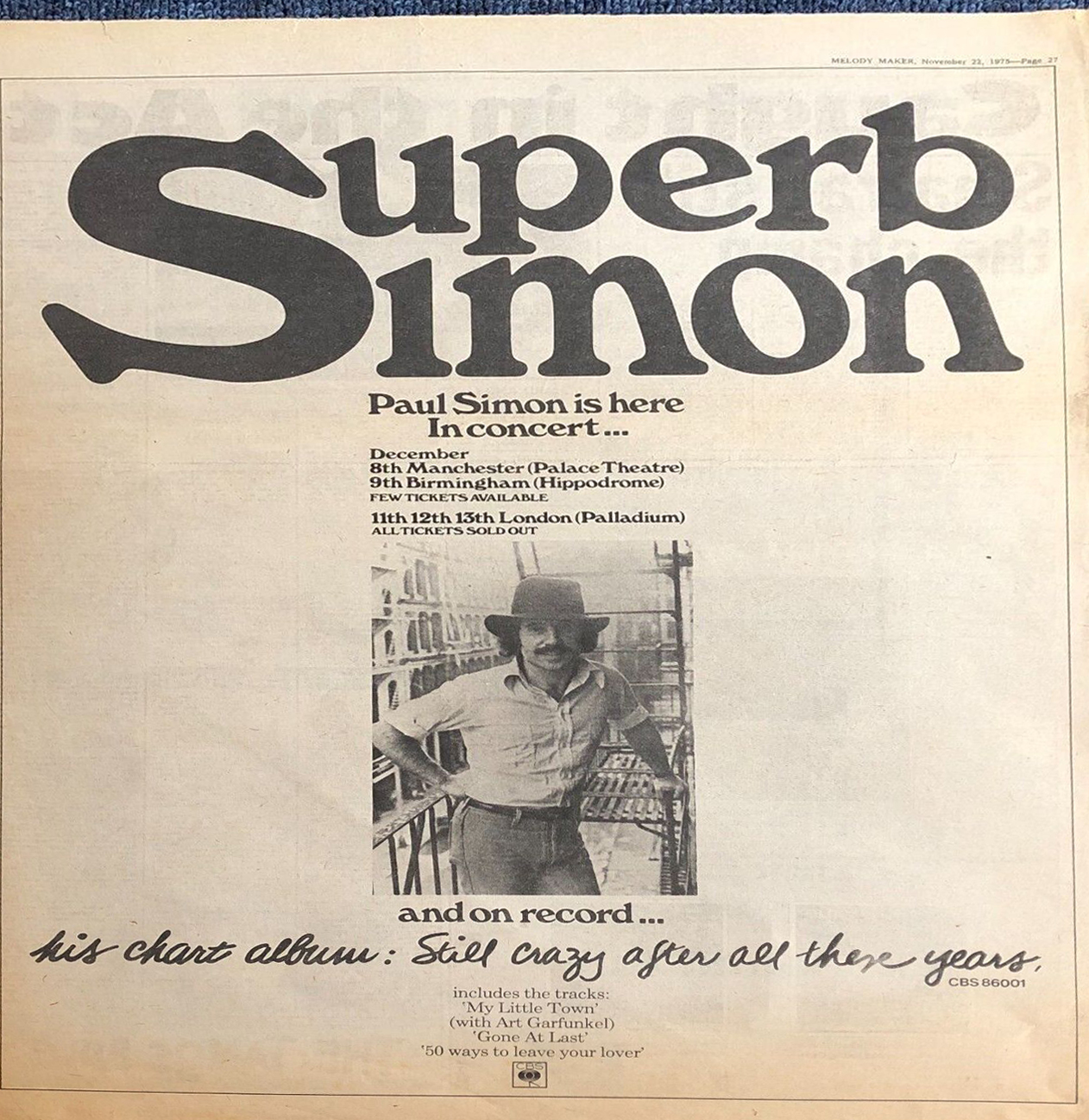
[With thanks to Roy for the advertisment]
Last month of 1975 brought Paul Simon to Europe to promote his latest album ” Still Crazy After All These Years”.
It brought him to the UK on:
1975-12-08 Manchester – United Kingdom Manchester Palace
1975-12-09 Birmingham – United Kingdom Hippodrome
1975-12-11 London – United Kingdom Palladium Theater
1975-12-12 London – United Kingdom Palladium Theater
1975-12-13 London – United Kingdom Palladium Theater
1975-12-27 London – United Kingdom Palladium Theater
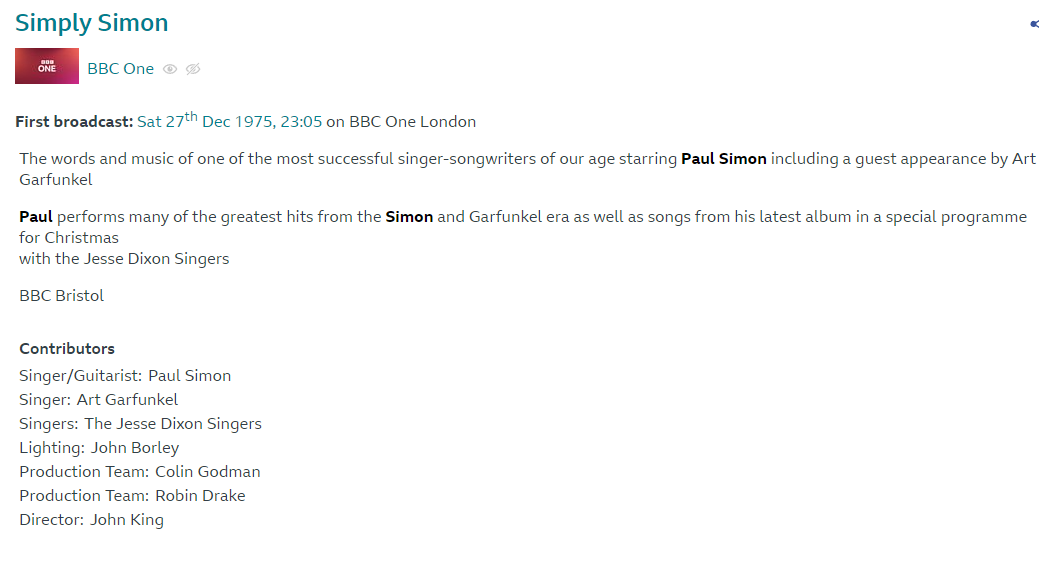
The last date was also the first broadcast of the BBC TV special ” Simply Simon ” and I am still not certain if this was recorded live at The Palladium or previously in studio.
 Paul Simon - 'Time it was...it was'